


Skip to content
01
Watch

On Stem Cell Care India




Key takeaways
- Understanding a handful of core terms — autologous, allogeneic, MSC, GMP — makes every other stem cell resource easier to follow.
- Some terms (like 'stem cell activation') are used loosely in marketing; this glossary sticks to accepted clinical definitions.
- Each term links to a deeper guide elsewhere on this site for readers who want more detail.
Stem Cell Therapy Glossary — Quick Facts
| Aspect | What to expect |
|---|---|
| Total terms covered | 12 core terms |
| Format | Definition list (dl/dt/dd), readable by AI search and screen readers |
| Best used with | Our production of stem cells and safety and risks guides |
01What Should Patients Be Aware of Before Considering Stem Cell Treatment to Make an Informed Decision?
It must be noted that the use of stem cells is still experimental in most cases and does not come with any guarantees, therefore patients must understand that this treatment cannot substitute regular medical treatment. It is crucial for patients to seek clinics that are accredited and have clear GMP guidelines and informed consent policies, among other requirements. Patients should be aware of the misconceptions associated with stem cell treatment, such as guaranteed cure. Stem Cell Care India offers educational materials for patients' consideration.
What Key Terms and Definitions Should Patients Understand When Exploring Stem Cell Therapy?
An introduction to stem cell therapy demands knowledge of concepts like autologous, allogeneic, mesenchymal, haematopoietic, pluripotent, paracrine signaling, engraftment, and differentiation. Common clinical terms include GMP compliance, intrathecal delivery, and immune modulation, among others. The glossary compiled by Stem Cell Care India is a handy guide for both the patient and family members to comprehend the terminologies involved in the course of their stem cell treatments.
- Adult stem cells
- Non-embryonic, non-differentiated stem cells. These stem cells can be found, amid others tissues, in bone marrow, fat tissue, umbilical cord blood, etc. (Also recognized as per differentiation ability: multipotent, totipotent and pluripotent). All the non-embryonic stem cells are considered adult stem cells.
- Allogeneic
- Refers to the procedure where the donor is a different individual from the receiver, reason why it is essential to look after tissue compatibility so as to avoid Graft-Versus-Host-Disease.
- Bone marrow stem cells
- Adult stem cells gotten from bone marrow.
- Autologous
- Refers to the process where the donor and receiver is the same individual, reason why the compatibility is a match.
- Cell therapy
- Refers to treatments centered on regenerative medicine to overhaul impaired or demolished tissue.
- Cord blood stem cell
- Adult Stem Cell gotten from umbilical cord blood collected at time of birth. These UCB stem cells are on the move from the liver (where blood production takes place during the fetal life) to bone marrow (where blood production takes place after birth). It is generally used for treatments of leukemia and other blood ailments in children, maximum cases have been on siblings.
- Embryonic stem cell
- Stem Cell gotten from a fertilized egg (blastocyst) after a couple of days of fertilization and before cell differentiation. Embryonic Stem cells are Totipotent, which means they can segregate into any type of tissue cell of the fetus.
- Differentiation
- Procedure by which a stem cell attains characteristics of a specialized cell line and becomes particular tissue cell.
- Good Manufacturing Practices (GMP)
- GMP are quality standards. It helps ensure products and processes follow and conform to the highest standards of quality and stipulations of that product or process.
- Hematopoietic stem cells
- Stem cells committed to blood cells (red cells, white cells, platelets).
- HLA (Human Leukocyte antigen)
- Human histocompatibility test, where immunological system markers of an individual are determined. By this system, our body distinguishes own cells from foreign cells/tissue. HLA tests are meant to find tissue compatibility between folks. When 6 markers are a match between two individuals, is said they have flawless compatibility. For transplants/treatments perfect match is necessary, but there are exclusions where 5/6 and up to 4/6 compatibility could be considered as satisfactory contingent on the patient, the disease and the source of stem cells being used.
- Multipotent stem cell
- Stem cells that could segregate into more than one type of cellular lines.
- Plasticity
- Ability/elasticity of a stem cell to segregate into other kinds of cell lines.
- Pluripotent stem cell
- Stem cells that can differentiate into virtually any category of cell line.
- Potentiality
- Is the capability to separate into specific tissue cells. They are categorized into Unipotent, Multipotent and Totipotent cells. This depends on the number of cell lines that they can segregate into.
- Mesenchymal stem cell (Also acknowledged as stromal)
- Group of bone marrow stem cells not committed to blood cell production. Mesenchymal stem cells are able to grow and differentiate into diverse kinds of cells. See our MSC therapy guide.
- Protocol
- A set of actions, approaches and the observance of certain conventional rules, which are premeditated and structured for a process. They are intended to systematize behavior in a particular situation.
- Progenitor stem cells (or Unipotent stem cell)
- Are stem cells that could separate into a single kind of cellular line. At the end of a lengthy chain of cell division are "fully differentiated" cells, such as a liver cell or lung cell, which are perpetually committed to particular functions of that tissue. It results in the retrieval of the tissue and they act as a repair system for the body. And they persevere with the same organism throughout the life of it.
- Regenerative medicine
- Treatment where stem cells are persuaded to segregate into particular cells type required to repair impaired or devastated tissue.
- Research protocol
- A collection of information that defines the objectives, design, methodology and considerations taken into account in the implementation and organization of scientific research. It includes the investigation and interpretation of outcomes. It also offers the background and reasons as to why such research is being carried out and outlines the parameters under which it will measure its outcomes.
- Stem cells
- Primary cells that are able to burgeon themselves (indefinitely) and to segregate into cells of particular types.
- Self-renewable
- It refers to the aptitude to duplicate via numerous cycles of cellular division maintaining his state unsegregated.
- Stem Cell CD34
- Hematopoietic Stem Cell with particular molecular structure showing a surface marking differentiator (CD refers to Cluster Differentiator and number 34 refers to kind of marker displayed by true stem cells).
- Totipotent stem cell
- Stem cells that can differentiate into all body cell categories and are able to form a complete, viable organism. An example would be the cells of a freshly fertilized egg.
- Unipotent
- They are stem cells that could segregate into a single kind of cellular line.
- Tissue engineering
- Refers to construction of new tissue centered on stem cells. Tissues such as skin or cartilage could be produced outside the body and be relocated later to the patient.
Frequently Asked Questions
Term-specific questions patients ask while researching.
What does 'autologous' mean in stem cell therapy?+
It means the cells used come from the patient's own body — for example, their own bone marrow or fat tissue.
What is the difference between MSCs and exosomes?+
MSCs are whole living cells; exosomes are small particles secreted by cells that carry signalling molecules, studied as a possible cell-free alternative in some applications.
What does GMP mean and why does it matter?+
GMP (Good Manufacturing Practice) is an internationally recognized quality framework that keeps cell processing consistent and reduces contamination risk — it's a marker of a facility's quality standards.
What is an investigational treatment?+
It's a therapy still under study rather than a fully approved standard of care, used within a regulated framework such as India's ICMR guidelines (2017).
What is intrathecal injection used for?+
It delivers cells into the fluid-filled space around the spinal cord, used to target neurological conditions more directly than an IV infusion.
See also: Types of Stem Cells Mesenchymal Stem Cell Therapy Stromal Vascular Fraction (SVF) Stem Cell Delivery Methods Production of Stem Cells Stem Cell Therapy Overview Limitations of Stem Cell Treatment
Ready to find out if you're a candidate?
Share your diagnosis and reports and our medical team will get back with a free, doctor-reviewed opinion — no obligation.
Related Videos
More videos from the Stem Cell Care India team and our patients.
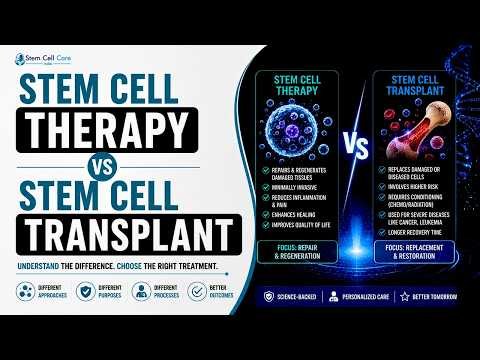
Stem Cell Therapy vs Stem Cell Transplant | Key Differences
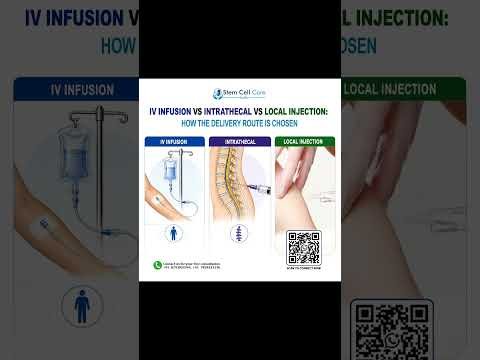
IV Infusion vs Intrathecal vs Local Injection: How the Delivery Route Is Chosen Not every stem cell
IV infusion vs intrathecal vs local injection — how the delivery route is chosen for each patient
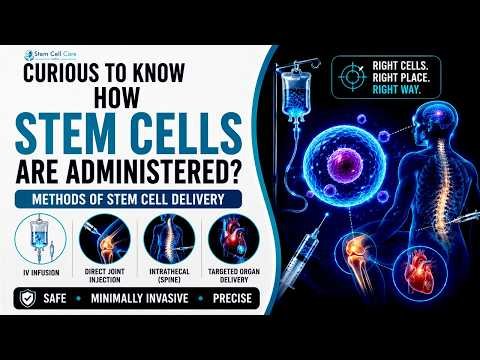
Curious to know how stem cells are really given to patients? | IV, Intrathecal & Local Injections
Continue Exploring
Related reading, picked for this page.
Resource
Terms and Conditions
Footer.
Read more Stem Cell TherapyAmniotic-Derived Stem Cell Activator Injections
Amniotic derived stem cell activator injections.
Read more Stem Cell TherapyBone Marrow-Derived Stem Cell Injections
Bone marrow derived stem cell injections.
Read more ScienceThe Science Behind Stem Cell Therapy
Science of stem cell therapy.
Read more Patient GuideStem cell treatment in India: costs, care tiers,…
International patient guide.
Read more Get StartedAppointment
Book appointment stem cell care India.
Read more
About this guide: This page is written, reviewed, and medically approved as credited above. Content reflects the investigational status of stem cell and exosome applications under India's National Ethical Guidelines for Biomedical and Health Research (ICMR, 2017) and is not a substitute for individualized medical advice. See our full treatment disclaimer for details.
Keep exploringTerms and Conditions5 Myths About Stem Cells: What Science Actually SaysAbout Your Condition: How We Review Your CaseAdverse Effects of Stem Cell Therapy: What's ReportedAmniotic-Derived Stem Cell Activator Injections
Explore related topics
More depth on the subjects covered in this guide.
Types of Stem Cells
Embryonic, adult, and iPSC stem cells compared.
Mesenchymal Stem Cell Therapy
The most-studied adult stem cell type explained.
Stromal Vascular Fraction (SVF)
The mixed cell fraction extracted from fat.
Stem Cell Delivery Methods
IV, intrathecal, and local injection compared.
Production of Stem Cells
How cells are sourced, isolated, and GMP-processed.
Stem Cell Therapy Overview
What stem cell therapy is and who typically considers it.
Full FAQ
Every common question about treatment, cost, and travel.
Still have a question?
Every case is different. A free medical evaluation gets you a direct, physician-reviewed answer for your specific condition — typically reviewed within about 7 working days.
Keep reading
Articles You May Interest
Watch
Related Videos


Ready to take the next step?
Talk to a case coordinator about your specific condition and treatment options.
24–48hFrom sending your reports to a doctor-reviewed answer
10,000+Patients treated across 65+ countries
4.9 / 5From 196+ verified Google reviews