


Skip to content
01
02
03
Watch
On Stem Cell Care India



Quick answer
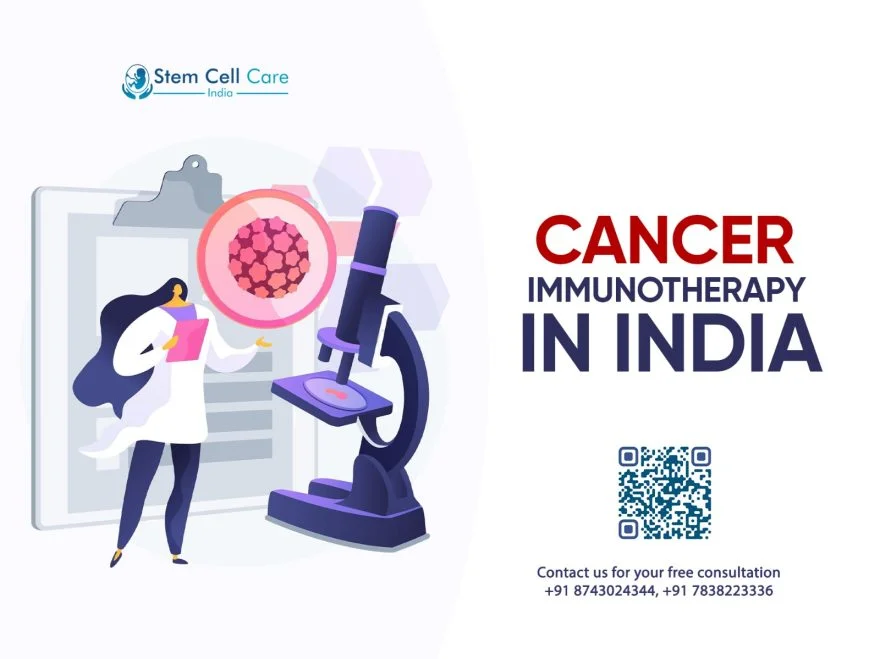
Cancer immunotherapy works by helping the immune system better recognize and act against cancer cells, using approaches that range from checkpoint inhibitor drugs to cell-based techniques. It is a distinct, evolving field within oncology, with applicability that depends heavily on the specific cancer type and stage.
Cancer Immunotherapy — Quick Facts
| Aspect | What to expect |
|---|---|
| Core idea | Helping the immune system recognize and act against cancer cells |
| Main approach categories | Checkpoint inhibitors, cell-based therapies, and other immune-modulating techniques |
| Applicability | Highly specific to cancer type, stage, and patient health status |
| Related cell-based approach | Natural killer (NK) cell treatment, discussed as one immune-cell-based technique |
| Coordination | Typically discussed alongside the patient's oncology care team |
| Outcome guarantee | None — outcomes vary significantly by cancer type and individual case |
01What Cancer Immunotherapy Involves
Topic 01 of 3Skip ahead: Why Is Cancer Immunotherapy Right?
The short answer, before the detail below.
Cancer is one of the most important and leading cause worldwide causing people to lose their lives in large number. On an average it is estimated that about 14 million new cancer trouble cases are logged along with 8.2 million deaths recorded on an average. Cancer happens to affect when the uncontrolled growth of cells is recorded which affects the surrounding healthy cells to a great extent. To control the cancer cells growth and manage the overall functioning of the body.
What Are Dendritic Cells?
Ralph M. Steinman, the scientist of Rockefeller University found in 1973 that the dendritic cells are mainly in charge of directing other immune cells. Dr. Steinman won the 2011 Nobel Prize in Physiology or Medicine for this discovery.
Dendritic cells are the ones which form the antigen cells, these are an important part which forms the immune system. The antigen cells are an integral part of the body which holds the ability to induce some kind of primary response to the immune system. These are the cells that attain some level of scientific and clinical interest which happens to affect due to their immense and noticeable role in the anti-cancer responses. Stem cell treatment for cancer using the dendritic cells makes the whole experience of stem cells much more enjoyable.
Do you Know About Cancer Using Dendritic Cells?
Dendritic cells (DCs) are a complex group of antigen-presenting specialized cells with important functions in activating and controlling innate and adaptive immune responses. As such, there is currently a great deal of interest in modulating the DC feature to enhance immunotherapy for cancer. Several strategies for targeting cancer DCs have been developed, such as the administration of immunomodulator antigens that mobilize and activate endogenous DCs, as well as the generation of DC-based vaccines. Improved cancer therapies could lead to a greater understanding of the diversity and roles of DC subsets and how they are formed by the tumour microenvironment.
Which type of cancer can be treated by this therapy?
Theoretically, all cancers can be treated. So far, treatments have shown benefits for cancers like prostate, colorectal, ovarian, breast, melanoma, pancreatic, and renal cell cancers. These cancers have higher success rates with treatment. If you're interested, it's important to talk to a doctor about using DC therapy to fight certain types of cancer.
02Why Is Cancer Immunotherapy Right?
Topic 02 of 3Skip ahead: Procedure
Cancer immunotherapy can easily fight against the cancer cells and can be more effective than any other therapy.
- Increases your quality of life.
- You can use it with other treatments like chemotherapy or radiation therapy.
- A good way to fight tumors.
- The research found that more people lived longer because of the treatment.
03Procedure
Topic 03 of 3
Day 1-
- Pick up from the Airport to the Hospital
- Interaction between Dr and Patient, to clear all their doubts at that time
- Admission procedure
- Clinical examination & Lab test will be done prescribed by the doctor
- Supportive Therapy
Day 2-
- Stem cell Procedure
- Supportive therapies
- Physiotherapy
Day 3-
- Supportive Therapy
- Physiotherapy
- Discharging formalities
- Drop back to the Airport
The therapy sessions given to the patients at Stem Cell Care India occur in the VIP treatment room in the advanced clinic. 24*7 supervision is maintained on the patients by the efficient medical team. Stem Cell Care India highly recommends the patients stay for a minimum of 3 days in Hospital.
Frequently Asked Questions
Straight answers to what people usually ask about cancer immunotherapy.
What is Dendritic Cell Therapy, and how does it work?+
Dendritic Cell Therapy is a kind of cancer vaccine made from your own blood. In the lab, your dendritic cells are primed and replicated to expose your specific cancer to your immune system. The 'trained' cells would increase the ability of your body to work against the cancer by concentrating the dendritic cells of your body on correctly identifying the cancer of your body as a threat and then reintroducing those cells into your system.
How is the Treatment Carried Out?+
A clean blood sample is taken. In the lab, monocyte cells are washed and exposed to various growth factors in order to transform into dendritic cells. Dendritic cells are "primed" by being exposed to specific cancer antigens. After 7 days in the laboratory, the patient can receive qualified and concentrated dendritic cells with a simple injection or infusion. Cancer cells are stimulated and bound by cytotoxic T-cells, causing them to die (apoptosis).
Which type of cancer can be treated by this therapy?+
Theoretically, all cancers can be treated. So far, treatments have shown benefits for cancers like prostate, colorectal, ovarian, breast, melanoma, pancreatic, and renal cell cancers. These cancers have higher success rates with treatment.
What are the side effects of the treatment?+
Dendritic cell therapy usually doesn't cause big problems. Some patients might feel a bit feverish for a day or two after getting the vaccine. Others might feel tired or weak for a few days. So far, no patients have had any severe allergic reactions.
When should a patient take the therapy?+
When the sickness isn't getting worse; when the person doesn't have the illness anymore but there's a chance it could come back; to provide comfort and relief; when the patient needs immune therapy along with chemo and radiation; when everything else has been tried; or when the person's body isn't strong enough for chemo or radiation treatment.
What is cancer immunotherapy?+
Cancer immunotherapy is an approach that aims to help the body's own immune system recognize and act against cancer cells, rather than attacking the cancer directly.
What types of cancer immunotherapy exist?+
Categories include checkpoint inhibitor drugs, cell-based approaches using immune cells, engineered monoclonal antibodies, and cancer vaccines, each working through a different mechanism.
How does NK cell treatment relate to cancer immunotherapy?+
NK cell treatment is one example of a cell-based immunotherapy approach, using immune cells with a natural ability to act against abnormal cells.
Is cancer immunotherapy available for all cancer types?+
No. Applicability depends heavily on the specific cancer type, stage, and the patient's overall health. Some cancers have well-established immunotherapy options; others do not.
Does immunotherapy replace chemotherapy or surgery?+
Not necessarily. It is typically considered alongside, not automatically instead of, standard oncology treatment, and is coordinated with the patient's existing oncology team.
How do I find out if immunotherapy applies to my cancer?+
This is assessed during a free medical evaluation, where the clinical team reviews the diagnosis and staging against available options.
Does cancer immunotherapy guarantee remission?+
No. Outcomes vary significantly by cancer type, stage, and individual factors, and are not guaranteed. See our safety and guarantees page.
How does cancer immunotherapy relate to exosome therapy for Retinal Detachment?+
They are complementary, not interchangeable. Cancer immunotherapy supports function and recovery directly, while Exosome Therapy for Retinal Detachment targets vision loss from a detached retina at the cellular level; some patients use both as part of one care plan.
Can cancer immunotherapy be combined with exosome therapy for Retinopathy?+
Yes. Cancer immunotherapy and Exosome Therapy for Retinopathy address different aspects of recovery, and the two are often coordinated within the same care plan for patients dealing with retinal blood-vessel damage, often diabetes-related, when both are clinically appropriate.
Do patients pair cancer immunotherapy with exosome therapy for Diabetic Neuropathy?+
Some do. Patients researching nerve pain and numbness from diabetes sometimes explore Exosome Therapy for Diabetic Neuropathy as a complementary option alongside cancer immunotherapy, with the combination assessed case-by-case during a free medical evaluation.
Is exosome therapy for Muscular Dystrophy offered alongside cancer immunotherapy?+
It can be. Exosome Therapy for Muscular Dystrophy is a separate regenerative option some patients consider alongside cancer immunotherapy when managing progressive muscle weakness, coordinated by the clinical team rather than self-directed.
How does cancer immunotherapy relate to exosome therapy for Osteoporosis?+
They are complementary, not interchangeable. Cancer immunotherapy supports function and recovery directly, while Exosome Therapy for Osteoporosis targets low bone density and fracture risk at the cellular level; some patients use both as part of one care plan.
Can cancer immunotherapy be combined with exosome therapy for Parkinson’s Disease?+
Yes. Cancer immunotherapy and Exosome Therapy for Parkinson’s Disease address different aspects of recovery, and the two are often coordinated within the same care plan for patients dealing with tremor, rigidity, and movement symptoms, when both are clinically appropriate.
Do patients pair cancer immunotherapy with exosome therapy for Rheumatoid Arthritis?+
Some do. Patients researching autoimmune joint inflammation sometimes explore Exosome Therapy for Rheumatoid Arthritis as a complementary option alongside cancer immunotherapy, with the combination assessed case-by-case during a free medical evaluation.
Is exosome therapy for Sciatic Nerve Injury & Sciatica offered alongside cancer immunotherapy?+
It can be. Exosome Therapy for Sciatic Nerve Injury & Sciatica is a separate regenerative option some patients consider alongside cancer immunotherapy when managing sciatic nerve pain radiating down the leg, coordinated by the clinical team rather than self-directed.
How does cancer immunotherapy relate to exosome therapy for Shoulder Injury?+
They are complementary, not interchangeable. Cancer immunotherapy supports function and recovery directly, while Exosome Therapy for Shoulder Injury targets rotator cuff and shoulder joint damage at the cellular level; some patients use both as part of one care plan.
Can cancer immunotherapy be combined with exosome therapy for Spinal Cord Injury?+
Yes. Cancer immunotherapy and Exosome Therapy for Spinal Cord Injury address different aspects of recovery, and the two are often coordinated within the same care plan for patients dealing with loss of motor or sensory function after cord damage, when both are clinically appropriate.
Do patients pair cancer immunotherapy with exosome therapy for Spinal Muscular Atrophy?+
Some do. Patients researching motor-neuron loss and progressive weakness in SMA sometimes explore Exosome Therapy for Spinal Muscular Atrophy as a complementary option alongside cancer immunotherapy, with the combination assessed case-by-case during a free medical evaluation.
Is exosome therapy for Sports Injuries offered alongside cancer immunotherapy?+
It can be. Exosome Therapy for Sports Injuries is a separate regenerative option some patients consider alongside cancer immunotherapy when managing soft-tissue and joint injuries from athletic activity, coordinated by the clinical team rather than self-directed.
How does cancer immunotherapy relate to exosome therapy for Systemic Lupus?+
They are complementary, not interchangeable. Cancer immunotherapy supports function and recovery directly, while Exosome Therapy for Systemic Lupus targets autoimmune inflammation affecting multiple organs at the cellular level; some patients use both as part of one care plan.
Can cancer immunotherapy be combined with exosome therapy for Wound Healing?+
Yes. Cancer immunotherapy and Exosome Therapy for Wound Healing address different aspects of recovery, and the two are often coordinated within the same care plan for patients dealing with slow-healing or chronic wounds, when both are clinically appropriate.
See also: Natural killer (NK) cell treatment Exosome therapy Gene therapy Peripheral blood stem cell treatment Nutrition therapy Full FAQ Hyperbaric oxygen therapy
Building a full recovery plan, not just a procedure?
Our team can combine stem cell therapy with the right supportive therapies for your case — free, no obligation.
Related Videos
More videos from the Stem Cell Care India team and our patients.
Exosome Therapy for Spinal Cord Injury: Can It Help Restore Nerve Function?
The Patient from Manipur, Physiotherapy session for Spinal cord injury at SCCI | Stem Cell Therapy
Patient with Spinal Cord Injury shares his experience at SCCI| Stem Cell Therapy for SCI in India
Patient with Spinal Cord Injury shares his experience after stem cell therapy - Stem Cell Care…
Continue Exploring
Related reading, picked for this page.
Supportive Therapy
Natural Killer (NK) Cell Treatment: How It Works
Natural killer cell treatment India.
Read more Stem Cell TherapyHow Stem Cell Therapy Works: The Mechanisms Behind…
How stem cell therapy works.
Read more Supportive TherapyHyperbaric Oxygen Therapy (HBOT) in India: How It Works
Hyperbaric oxygen therapy in India.
Read more Patient GuideStem cell treatment in India: costs, care tiers,…
International patient guide.
Read more Patient GuideTestimonials
Patient Guide.
Read more Get StartedAppointment
Book appointment stem cell care India.
Read more
About this guide: This page is written, reviewed, and medically approved as credited above. It is educational and does not represent an offer of a specific immunotherapy product. See our full treatment disclaimer for details.
Keep exploringVIP Treatment at Stem Cell Care India: What It Includes & How It WorksHow Stem Cell Therapy Works: The Mechanisms Behind the TreatmentStem Cell Therapy: How It Works and Who It May Help
Explore related topics
More depth on the subjects covered in this guide.
Supportive Therapies
The full rehabilitation ecosystem overview.
Natural Killer (NK) Cell Treatment
Immune-based approaches using natural killer cells.
Exosome Therapy in India
Cell-secreted particles used to support repair signaling.
Gene Therapy in India
Correcting or modifying genetic material — mechanism and status.
Peripheral Blood Stem Cell Treatment
Collection via apheresis and preparation for treatment.
Nutrition Therapy in India
Targeted nutritional interventions for specific conditions.
Still have a question?
Every case is different. A free medical evaluation gets you a direct, physician-reviewed answer for your specific condition — typically reviewed within about 7 working days.
Keep reading
Articles You May Interest
Watch
Related Videos


Ready to take the next step?
Talk to a case coordinator about your specific condition and treatment options.
24–48hFrom sending your reports to a doctor-reviewed answer
10,000+Patients treated across 65+ countries
4.9 / 5From 196+ verified Google reviews
Sources & Further Reading
Independent public sources for checking the evidence yourself. The PubMed and ClinicalTrials.gov links open live database searches, so results update as new research is published. Listing a source here is not an endorsement of any treatment.