



Skip to content
01
02
03
04
05
Watch
On Stem Cell Care India




Key takeaways
- Stem cell therapy applies progenitor cells to support the body's own tissue-repair response in conditions such as orthopedic, neurological, and organ-specific disease.
- Cells are typically delivered by intravenous infusion, intrathecal injection, or local injection, depending on the condition being addressed.
- Sources include the patient's own bone marrow, fat tissue, or blood (autologous), or consented umbilical cord tissue (allogeneic) — never embryonic or fetal cells.
- This therapy remains investigational under India's ICMR guidelines (2017); it is not FDA-approved and no outcome is guaranteed.
- A free medical evaluation is the starting point for finding out whether a case is suitable.
Stem Cell Therapy — Quick Facts
| Aspect | What to expect |
|---|---|
| What it is | Investigational use of progenitor cells to support tissue repair and modulate inflammation |
| Cell sources | Patient's own bone marrow, fat, or blood; or consented umbilical cord tissue |
| Embryonic/fetal cells | Not used in any treatment |
| Delivery methods | Intravenous infusion, intrathecal injection, or local/site-specific injection |
| Typical setting | Outpatient clinic visit; hospital stay usually not required |
01What Is Stem Cell Therapy and How Is It Applied as an Investigational Treatment?
Ans: Stem cell therapy means the application of progenitor cells in aiding the body's self-repairing process in case of injured or diseased tissue. Progenitor cell therapy is used investigationally in diseases like neurological, orthopedic, organ specific diseases, and autoimmune disorders. Methods of delivery can be through intravenous administration, intrathecal delivery, and localized delivery according to the area being targeted. According to ICMR guidelines, this therapy still remains investigational.
Our body consists of millions of different cells, and every cell has its own function. These cells are all derived from stem cells which are basically the most versatile cells as they can be differentiated into various types of tissues. Since they have the ability to convert, fix, and grow new cells, stem cells become a potential weapon in future medicine.
Stem cell therapy is a medical intervention that uses these different cells to the advantage of the body. They do it by repairing the damaged tissues, making the functions that are lost to become normal again, and giving the body the ability to live for a long time. Presently, this therapy is reckoned as the most promising ones to be used in the treatment of people with chronic, degenerative, or autoimmune diseases.
02Stem Cell Therapy in India: The Future of Regenerative Medicine
Topic 02 of 5Skip ahead: Benefits of Stem Cell Therapy
Stem cell therapy is changing the health system by offering the patient a more organic and less painful way of healing. On their own, stem cells do not merely alleviate symptoms. Rather, they go to the root of the area that is damaged. They not only repair tissues but also increase mobility, decrease the possibility of pain in the future and promote overall health for a long time.
We at Stem Cell Care India, provide the best and most reliable regenerative treatments that are tailored to each patient's condition. By leveraging technology, the expertise of doctors, and following the highest international standards, we offer safe, effective, and customized stem cell therapies for chronic and degenerative diseases.
Understanding Stem Cells: Nature's Master Healers
Stem cells are the most potent healing agents that the body can ever have. Every different cell that exists in the human body, i.e. brain cell, muscle cell, blood cell, or bone cell, actually comes from a stem cell. What differentiates stem cells from others is their inherent capacity to fix, make, and give back the tissues that are impaired. For this reason, stem cell treatment is currently regarded as one of the most significant medical innovations of the 21st century. Key abilities of stem cells:
- Change to various cell types like nerve, muscle, bone, blood, and cartilage
- Tissue repair and the restoration of the body's healing process
- Decrease swelling and inflammation around the injured area
- Recover faster and better body function over time
- Be of assistance in the condition of certain diseases by slowing their progression
- Allow the body to regenerate the tissues naturally without giving harmful effects
How Stem Cell Therapy Is Advancing Healthcare?
Healthcare is undergoing a major change with stem cell therapy leading the way. Essentially, by going after the very causes, it is changing the doctors' approach to treat chronic diseases, injuries, and age-related conditions. On top of that, stem cells repair and regenerate the injured tissues naturally, which makes the whole process not only safer but also more effective for a larger number of patients.
Stem cell therapy in India has helped those with long-term health problems to get a new lease on life like, degenerative disorders, neurological issues, orthopedic injuries, and autoimmune conditions. Stem cell treatment is a great method to:
- Recovery On a Much Faster Track: The process of healing gets sped up since stem cells indeed target the area that is damaged.
- Less Major Surgeries: Several patients might just be able to refrain from complicated surgical interventions as their bodies become capable of repairing naturally via stem cell injection.
- Almost No Recovery Period: As the procedure only involves little incisions (if any), normally people can go back to their routine lives very quickly.
- Functional improvements predicated on long-term effects: Those who receive therapy witness it in terms of increased mobility, strength, and general well-being over a longer period of time.
Today's improved treatment plans are personalized to each person's condition, making outcomes more reliable and safer. Enhanced scientific techniques ensure high-quality stem cells, increasing the success rate of therapy.
Advancing Healthcare with Stem Cell Therapy
India's healthcare system is undergoing a significant change. Stem cell therapy is no longer a distant dream, it is now a viable and efficient choice for those seeking non-surgical, durable, and natural healing.
Once introduced to damaged areas, stem cells can rebuild the tissues and can even regulate the immune system. Therefore, they are quite useful for the following health conditions:
- Injuries of the spinal cord and bones or joints
- Heart and blood vessel diseases
- Diabetes
- Disorders of the immune system and nerves
Stem cell therapy is fundamentally different from symptom-reducing ones, as it actually supports a body's self-healing process. Along with a faster recovery, very little downtime, and fewer chances of complications, it is indeed a new milestone in the field of regenerative medicine of personalized care.
03Benefits of Stem Cell Therapy
Stem cell therapy is a new type of medical treatment using the body's own healing abilities to repair damage and restore health. Unlike conventional forms that only treat the symptoms, stem cell therapy heals from the inside out. It is generally well-tolerated, minimally invasive, and is explored as a long-term option for most conditions and injuries. Some of its benefits include:
Stem cells recruit the body's natural mechanism of repair and thus greatly facilitate the following renovations:
- Connective tissues
- Muscle
- Connective tissues from tendons
- Ligaments
- Nerves
- Organs
- Skin
Consequently, this goes beyond mere symptomatic relief towards real structural improvement.
- Natural Healing and Regeneration. Stem cell therapy in India helps the body by using special cells that can become different body tissues. This helps the body heal automatically. Instead of merely suppressing symptoms, it induces repair of the actual damage and therefore leads to true muscle, bone, and joint regeneration.
Stem cell therapy can be used as a first option before the following interventions are considered:
- Total knee replacement
- Hip replacement
- Back operation
- Shoulder operation
- Ligament reconstruction
- Less Need for Surgery. The majority of individuals choose stem cell therapy to avoid invasive surgery. Surgery is risky, painful, and expensive. Patients can forgo surgery altogether or delay it for a few years with stem cell therapy. This is especially ideal for those suffering from joint problems, arthritis, or injuries.
Since the procedure is less invasive, the patients enjoy:
- No hospital stay
- No general anesthesia
- Quickly return to normal activities
- Minimal post-procedure restrictions
- Faster Recovery. Unlike surgery, which tends to take a long period to heal from, stem cell therapy does not require as much downtime. Patients can return to normal lives in no time. The treatment is minimally invasive, with fewer stitches or incisions, so the body heals quickly.
By addressing the issues beneath the surface, stem cells are able to provide lasting relief from:
- Arthritis
- Chronic joint pain
- Back pain
- Sports injuries
- Degenerative conditions
- Long-Term Relief. Stem cell Treatment in India is intended to fix the root cause of pain, not just treat the symptoms temporarily. By repairing and regenerating tissue, it provides sustained relief from pain conditions such as chronic pain, joint stiffness, and sports injuries. Improvement for the majority of patients lasts for months or years.
Using stem cells from your own body (autologous) is associated with:
- Substantially lower risk of rejection
- Reduced likelihood of immune system complications
- Excellent compatibility
- Improved chances of success
- Personalized Treatment Approach. Every patient is different. Stem cell therapy can be individually customized to fit each person's needs. Doctors use the patient's own cells, thereby eliminating the risk of rejection and side effects. This makes the treatment safer and more successful.
- Strong Anti-Inflammatory Effects. Stem cell therapy helps reduce inflammation naturally in the body. Its strong anti-inflammatory effects can relieve pain, swelling, and stiffness in joints and tissues. This makes it useful for conditions like arthritis, injuries, and chronic inflammation. By calming inflammation, stem cells support faster healing, improve mobility, and help patients feel more comfortable without relying heavily on medicines. Stem cells help lower persistent inflammation, offering relief for conditions like:
- Rheumatoid and osteoarthritis
- Autoimmune diseases
- Nerve damage (neuropathy)
- Long-term pain disorders
- Widespread inflammatory conditions
- Anti-Aging & Wellness Support. Stem cell therapy helps slow aging and boosts overall wellness. It supports skin health, improves energy, and strengthens immunity. By repairing damaged cells, it promotes better organ function and joint health. Many patients feel more active, recover faster, and experience improved vitality. This therapy works from within, naturally supporting long-term health and a youthful, energetic life. Stem cell treatments have the potential to enhance:
- Skin health and appearance
- Overall energy and vitality
- Metabolic function
- Immune system strength
- Cellular regeneration and repair
04Stem Cell Therapy & Chronic Diseases: The Promise of Regeneration
Topic 04 of 5Skip ahead: Who Typically Considers It
Chronic diseases have the potential to slowly dismantle the strength of a person's body and in the end, life may appear as a difficult task. Stem cell therapy is one of the newest methods that make the body heal itself inherently by locating the damaged areas and thereby, elevating the overall health of the body.
- Injecting Stem Cells: The process starts with carefully injecting stem cells into the affected area. These cells can come from the patient's own body or from a donor. They are placed where healing is needed the most.
- Migration to Damaged Tissue: Once injected, stem cells travel to damaged tissues. They sense inflammation and injury, moving directly to the areas where the body needs repair.
- Replacing Damaged Cells: Stem cells have the ability to become the type of cells that are damaged in chronic diseases. For example, they can become heart cells, cartilage, or nerve cells, replacing damaged tissue with healthy new cells.
- Releasing Healing Signals: Stem cells release proteins and growth factors that help reduce inflammation and signal the body to start repairing itself. These signals also help nearby cells survive and function better.
- Reducing Inflammation: Chronic diseases often involve ongoing inflammation. Stem cells help calm the immune system, reduce swelling, and prevent further damage to tissues.
- Stimulating Tissue Regeneration: By activating the body's own repair mechanisms, stem cells encourage tissues to regenerate naturally. This helps improve organ function and reduces symptoms over time.
- Improving Blood Flow: Stem cells promote the growth of new blood vessels in damaged areas. Better blood flow brings oxygen and nutrients to tissues, which is essential for healing.
- Enhancing Immune Response: Stem cells help regulate the immune system, making it more effective at fighting infections and reducing harmful autoimmune reactions.
- Supporting Long-Term Recovery: Over time, the combined effects of tissue regeneration, reduced inflammation, and improved immune function support long-term recovery. Patients often experience better mobility, less pain, and improved quality of life.
- Ongoing Monitoring: Doctors monitor progress after stem cell therapy to ensure proper healing. Follow-ups help optimize recovery and adjust treatment if needed.
Promise of Stem Cell Therapy to Treat Chronic Disease
Stem cell therapy is one of the most exciting areas of modern medicine. Stem cells are special cells in the body that can grow into different types of tissues, such as muscle, nerve, or blood cells. Because of this unique power, doctors and scientists believe stem cells can bring hope for people living with long-term health problems.
Chronic diseases such as diabetes, heart disease, arthritis, and neurological disorders affect millions of people worldwide. These conditions are often difficult to manage with normal medicines and treatments. Stem cell therapy offers a new path that focuses on repairing or replacing damaged cells instead of only controlling symptoms. Here are some key promises of stem cell therapy:
- Regeneration of Damaged Tissues: Stem cells may help rebuild parts of the body that no longer work properly, such as heart tissue after a heart attack.
- Better Treatment for Diabetes: Stem cells can be turned into insulin-producing cells, giving hope to people with type 1 diabetes.
- Support for Brain and Nerve Diseases: Conditions like Parkinson's or spinal cord injuries could improve if stem cells replace damaged nerve cells.
- Reduced Need for Organ Transplants: In the future, stem cells might be used to grow healthy organs or repair them, lowering the demand for donor organs.
- Less Dependence on Lifelong Medicines: Instead of just managing symptoms, stem cells may treat the root cause of disease, helping people live healthier lives.
- Personalized Medicine: Stem cells can be taken from a person's own body, reducing the risk of rejection and making treatments more effective.
05Who Typically Considers It
Topic 05 of 5
Patients usually come to us in one of these situations.
Chronic joint or spine conditions
Patients managing osteoarthritis, degenerative disc disease, or sports injuries who want to understand cell-based options before or alongside surgery.
Neurological conditions
Families exploring investigational options for conditions such as cerebral palsy, ALS/MND, or spinal cord injury, usually alongside standard rehabilitation.
Have a question about your own case?Share your medical reports for a free, doctor-reviewed opinion — no obligation.
Autoimmune or inflammatory disease
Patients whose standard treatment has plateaued and who want a second, physician-reviewed opinion on regenerative options.
Aging and wellness
Patients interested in the anti-inflammatory and tissue-support properties associated with mesenchymal stem cells.
Frequently Asked Questions
Straight answers to the questions people ask before their first consultation.
What is stem cell therapy in simple terms?+
Stem cell therapy is the investigational use of progenitor cells to support the body's own tissue-repair process, most often delivered by IV infusion, intrathecal injection, or local injection depending on the condition being addressed.
Is stem cell therapy FDA-approved?+
No. Stem cell and exosome applications outside a small number of approved indications remain investigational, both in India under ICMR guidelines (2017) and in most other jurisdictions.
Where do the stem cells come from?+
Sources include the patient's own bone marrow, fat tissue, or blood (autologous), or consented umbilical cord tissue (allogeneic). Embryonic or fetal cells are never used.
How is stem cell therapy given to a patient?+
Depending on the condition, cells are delivered by intravenous infusion, intrathecal (spinal) injection, or direct local injection into a joint or affected tissue. See our delivery methods guide.
Does stem cell therapy guarantee a cure?+
No. Outcomes vary by patient and condition, and no cure or specific result is promised. Stem cell and exosome therapies are investigational under India's National Ethical Guidelines for Biomedical and Health Research (ICMR, 2017). Individual results vary and outcomes are not guaranteed. See our full treatment disclaimer.
Who is a candidate for stem cell therapy?+
Candidacy depends on the specific condition, medical history, and current health status. A free medical evaluation with our clinical team is the way to find out.
Is stem cell therapy painful?+
Cell collection and injection are typically done under local anesthesia where needed, in an outpatient setting, with most patients resuming normal activity the same or next day.
How long do results from stem cell therapy last?+
Where a response occurs, patients have reported improvements lasting from several months to a few years, though this varies significantly by individual and condition and is not guaranteed.
See also: How Stem Cell Therapy Works Mesenchymal Stem Cell Therapy Safety and Risks Types of Stem Cells Treatment Procedure Get a Free Medical Evaluation Three-Pillar Regenerative Approach Treatment Advantages in India
Ready to find out if you're a candidate?
Share your diagnosis and reports and our medical team will get back with a free, doctor-reviewed opinion — no obligation.
Related Videos
More videos from the Stem Cell Care India team and our patients.
Who May Be Eligible for Stem Cell Therapy: Understanding Patient Evaluation Before Treatment
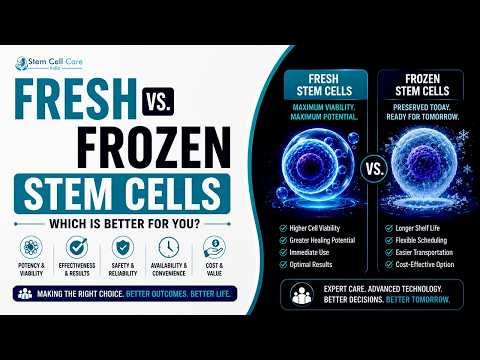
Fresh vs Frozen Stem Cells: Which Works Better?
Exosome Therapy for Motor Neuron Disease: How It Works & Real Benefits
Is stem cell therapy better than PRP? | Which One Works Better? Explained | Stem Cell Care India
Continue Exploring
Related reading, picked for this page.
Stem Cell Therapy
How Stem Cell Therapy Works: The Mechanisms Behind…
How stem cell therapy works.
Read more Supportive TherapyNatural Killer (NK) Cell Treatment: How It Works
Natural killer cell treatment India.
Read more Supportive TherapyCancer Immunotherapy: How It Works
Cancer immunotherapy India.
Read more Patient GuideStem cell treatment in India: costs, care tiers,…
International patient guide.
Read more ResourceFrequently Asked Questions About Stem Cell Therapy…
Frequently asked questions.
Read more Get StartedAppointment
Book appointment stem cell care India.
Read more
Treatment Disclaimer: We provide consultation, case evaluation, and patient support services in the field of regenerative medicine. As per current medical guidelines in India, stem cell-based interventions (other than approved indications) are considered investigational and are available only within regulated clinical research settings. For patients exploring broader options, we also assist in facilitating access to treatment pathways, including internationally accredited centers where different regulatory frameworks may apply.
About this guide: This page is written, reviewed, and medically approved as credited above. Content reflects the investigational status of stem cell and exosome applications under India's National Ethical Guidelines for Biomedical and Health Research (ICMR, 2017) and is not a substitute for individualized medical advice. See our full treatment disclaimer for details.
Keep exploringVIP Treatment at Stem Cell Care India: What It Includes & How It WorksIndian Travel Help Desk: Visa, Airport, Stay & 24×7 Travel SupportCancer Immunotherapy: How It WorksEpidural Stimulation Treatment: How It Works for Select Spinal Cord Injury CasesExosome Therapy in India: How It Works & What It's Used For
Explore related topics
More depth on the subjects covered in this guide.
How Stem Cell Therapy Works
The biological mechanisms behind any response.
Mesenchymal Stem Cell Therapy
The most-studied adult stem cell type explained.
Safety and Risks
Known risks and how they're reduced.
Types of Stem Cells
Embryonic, adult, and iPSC stem cells compared.
Treatment Procedure
What actually happens on treatment day.
Get a Free Medical Evaluation
Start with a physician-reviewed opinion on your case.
Full FAQ
Every common question about treatment, cost, and travel.
Still have a question?
Every case is different. A free medical evaluation gets you a direct, physician-reviewed answer for your specific condition — typically reviewed within about 7 working days.
Keep reading
Articles You May Interest
Watch
Related Videos


Ready to take the next step?
Talk to a case coordinator about your specific condition and treatment options.
24–48hFrom sending your reports to a doctor-reviewed answer
10,000+Patients treated across 65+ countries
4.9 / 5From 196+ verified Google reviews
Sources & Further Reading
Independent public sources for checking the evidence yourself. The PubMed and ClinicalTrials.gov links open live database searches, so results update as new research is published. Listing a source here is not an endorsement of any treatment.