



Skip to content
01
02
Watch

On Stem Cell Care India



Quick answer
Exosome therapy uses particles secreted by cultured stem cells — not the stem cells themselves — to support cell-to-cell signaling relevant to tissue repair. Production involves culturing stem cells and then isolating the exosomes they release, a process distinct from but related to standard stem cell expansion.
Exosome Therapy — Quick Facts
| Aspect | What to expect |
|---|---|
| What it is | Particles secreted by cultured stem cells, isolated for administration |
| Not the same as | Live stem cell transplantation |
| Production route | Stem cell culturing followed by exosome isolation and testing |
| Common pairing | Sometimes combined with stem cell treatment protocols |
| Outcome guarantee | None — investigational status applies |
On this page — 2 topics
01What Exosome Therapy Involves
Topic 01 of 2Skip ahead: Where Exosome Therapy Is Discussed
The short answer, before the detail below.
Exosomes are small membrane-bound particles that cells, including stem cells, release naturally as part of how they communicate with other cells. They carry proteins, lipids, and genetic material that can influence nearby cells. Exosome therapy involves culturing stem cells in a lab, then isolating the exosomes those cells secrete, testing them for quality, and preparing them for administration. Because exosomes are not living cells themselves, the biology involved is related to, but distinct from, standard stem cell production.
02Where Exosome Therapy Is Discussed
Topic 02 of 2
Contexts raised during case evaluations.
- As a complementary step alongside stem cell treatment protocols
- In cases where cell-signaling support is considered relevant to the care plan
- Alongside other supportive therapies as part of an individualized plan
- Only where the clinical team determines it fits the patient's specific case
Related Videos
More videos from the Stem Cell Care India team and our patients.
Orthopedic Healing Through Stem Cells: Real Patient Stories & Exosome Innovation
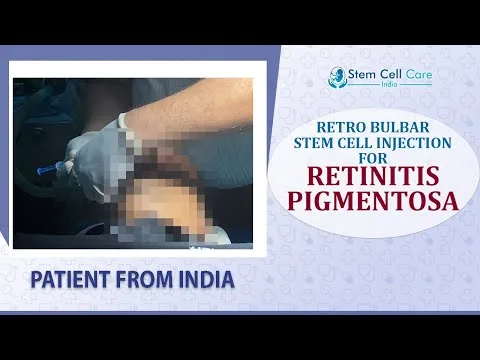
Patient With Retinitis Pigmentosa | exosome & stem cell injection for RP | Retro Bulbar Injection
Alzheimer's Disease Symptoms | Safe And Effective Treatment | Stem Cell Therapy | Exosome Therapy
Intra-Articular Stem Cell, Exosome & PRP Injection for Knee Strain | USA Patient
Watch
4 ShortsQuick Video Answers: Exosome Therapy
Short vertical videos from our YouTube channel on exosome therapy.
Exosomes + Stem Cells: The Most Powerful Regenerative Combination of 2026
Watch on YouTubeStem Cells vs Exosomes | What’s the Difference in Therapy?
Watch on YouTubeWhat is exosome therapy? You need to know in 3 minutes
Watch on YouTubeThe Role of Exosome Therapy for Regenerative Medicine: Benefits & Future
Watch on YouTubeBrowse all Stem Cell Care India Shorts
Educational content only. Patient stories are individual experiences; results vary from person to person and are not a promise of outcome or a substitute for advice from your treating doctor.
See also:Treatmentsstem cell therapystem cellssupportive therapiesAcupuncture Therapy
Continue Exploring
Related reading, picked for this page.
FAQ
VIP Treatment at Stem Cell Care India: What It…
VIP treatment stem cell care India.
Read more Supportive TherapyGene Therapy in India: How It Works & Current…
Gene therapy in India.
Read more Supportive TherapyPlatelet-Rich Plasma (PRP) Therapy: How It Works…
Platelet-rich plasma therapy India.
Read more Stem Cell TherapyStem Cell Therapy: How It Works and Who It May Help
Stem cell therapy.
Read more ResourceFrequently Asked Questions About Stem Cell Therapy…
Frequently asked questions.
Read more Get StartedAppointment
Book appointment stem cell care India.
Read more
About this guide: This page is written, reviewed, and medically approved as credited above. Content reflects the investigational status of exosome applications under India's National Ethical Guidelines for Biomedical and Health Research (ICMR, 2017). See our full treatment disclaimer for details.
Keep exploringVIP Treatment at Stem Cell Care India: What It Includes & How It WorksResearch & Publications: Peer-Reviewed Stem Cell & Exosome Therapy StudiesHow Stem Cell Therapy Works: The Mechanisms Behind the TreatmentStem Cell Therapy: How It Works and Who It May HelpWhy Mesenchymal Stem Cells Are Used So Often
Explore related topics
More depth on the subjects covered in this guide.
Supportive Therapies
The full rehabilitation ecosystem overview.
Platelet-Rich Plasma (PRP) Therapy
Concentrating a patient's own platelets to support repair.
Gene Therapy in India
Correcting or modifying genetic material — mechanism and status.
Natural Killer (NK) Cell Treatment
Immune-based approaches using natural killer cells.
Peripheral Blood Stem Cell Treatment
Collection via apheresis and preparation for treatment.
Cancer Immunotherapy
Helping the immune system act against cancer cells.
Still have a question?
Every case is different. A free medical evaluation gets you a direct, physician-reviewed answer for your specific condition — typically reviewed within about 7 working days.
Keep reading
Articles You May Interest
Watch
Related Videos


Ready to take the next step?
Talk to a case coordinator about your specific condition and treatment options.
24–48hFrom sending your reports to a doctor-reviewed answer
10,000+Patients treated across 65+ countries
4.9 / 5From 196+ verified Google reviews
Sources & Further Reading
Independent public sources for checking the evidence yourself. The PubMed and ClinicalTrials.gov links open live database searches, so results update as new research is published. Listing a source here is not an endorsement of any treatment.