


Skip to content
01
02
03
04
05
06
07
08
09
10
11
Watch
On Stem Cell Care India



Quick answer
Cell regeneration therapy utilizes biological cells such as stem cells and progenitor cells to regenerate damaged body tissue, as opposed to traditional pharmaceutical approaches that merely treat the symptoms. Regenerative methods of investigation are concerned with trying to correct the biological defect, not the symptom. Results may differ with each individual and each disorder. A specialist group will determine if regenerative medicine can be considered in addition to or following standard treatment protocols.
Cell Regeneration Therapy — Quick Facts
| Aspect | What to expect |
|---|---|
| Approaches covered | Stem cell therapy, PRP therapy, prolotherapy, cartilage regeneration |
| Cell sources | Bone marrow, peripheral blood, adipose tissue, muscle, amniotic fluid, placenta, umbilical cord tissue & cord blood |
| Common cell type | Mesenchymal stem cells (MSCs), a multipotent cell type |
| Milestones | 1960s stem cell discovery (McCulloch & Till); 2012 Nobel Prize for iPSCs (Yamanaka) |
01About Cell Regeneration
Topic 01 of 11Skip ahead: What is Cell Regeneration Therapy?
The process in which lost cells are restored and normal function can be recovered — different in each type of tissue and organ.
The process in which lost cells are restored and normal function can be recovered refers to cell regeneration. This process is different in each type of tissue and organ. Here are key aspects:
- Peripheral Nerves: Some functional categories which can be beneficial for nerve regeneration are nerve fibroblasts, Schwann cells, immune cells, and blood vessels.
- Mouse Digit Tip Regeneration: Made up of specialized cells that can develop into specific types of tissues and guided by the blastema.
- Sensory Organ: Strong regrowth of ear hair cells gives clues for possible cures for human deafness in non-mammal vertebrates.
- Human Uterus: Natural killer (NK) cells change and develop every month as the lining of the uterus renews itself and also during pregnancy.
- Drosophila Larval Wing Discs: A group of cells naturally resists cell death, helping to repair tissue after it is damaged.
Critical Factors in Cell Regeneration Processes
Various factors can influence the process of cell regeneration and each has its own significant role. Let's know about these process in brief:
- Presence of Specific Cell Types: Some cells are beneficial for healing and regeneration. Cells which can be found in developing wings of Drosophila larva are helpful in tissue healing and regeneration.
- Molecular Signaling Pathways: These pathways are really important for controlling regeneration. For instance, studying hair cell regeneration in animals that aren't mammals can be helpful in treating deafness in humans.
- Cellular Heterogeneity: Different kinds of cells in a tissue can impact how it heals. For example, in nerves, there are Schwann cells, nerve fibroblasts, and immune cells. Each of these cells helps in the regrowth of nerves.
- Local Tissue Environment: The surroundings close to cells affect how they change and work. For example, special cells called human uterine natural killer (uNK) cells change because the lining of the womb is getting better again. This change is caused by a substance called interleukin-15.
Cell regeneration is a complicated process because lots of things affect it, like what type of tissue or organ it is. To make regenerative medicine better, we need to understand how all these things work together.
02What is Cell Regeneration Therapy?
A hopeful medical approach which shows remarkable results in repairing and replacing damaged or diseased cells, tissues, and organs.
A hopeful medical approach which shows remarkable results in repairing and replacing damaged or diseased cells, tissues, and organs is known as cell regeneration therapy. This process has another name that is regenerative medicine or “stem cell therapy”. In this therapy, researchers use the regenerative potential of stem cells to treat the various medical conditions. These cells have the ability to regenerate and can transform into different specialized types of adult cells. The main focus to use this innovative medical therapy is to recover the functioning of damaged tissues and organs which helps the patient's to live a quality life.
In this modern treatment approach, stem cells are the special cells that are used. Stem cells can be derived from various areas of the body such as:
- Bone marrow
- Peripheral blood
- Adipose tissue
- Muscle tissue
- Amniotic fluid
- Placenta
- Umbilical cord tissue & cord blood
- Fetal tissue (ethically regulated)
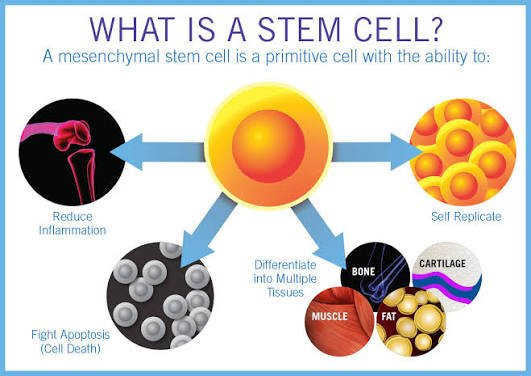
A type of multipotent cells commonly used in cell therapy is called mesenchymal stem cells (MSCs). These cells can grow into different kinds of tissues such as fat cells, cartilage cells, and bone cells. Because of this ability, MSCs are widely studied and considered a promising option for treating many health conditions.
However, this therapy shows remarkable results in tissue regeneration and healing, but there are several challenges and limitations to dodge like we need to figure out how strong stem cells are from different places, make standard ways to measure them, and make sure that this treatment is safe and effective for every individual. By the way, various clinical trials and researchers are still in process to know about the potential and understand the biology of stem cells.
Advantages of Cell Regeneration Therapy
Cell regeneration therapy has the potential to treat various medical condition and also provide several benefits to the patients, below are some of the advantages of this therapy:
1. Low-Impact Delivery Techniques
Some research has made easier ways to put stem cells into the body, like special tiny needles that can be removed after they're inserted. These needles help the cells stay alive and get into the right place in the body.
2. Therapy for a Range of Illnesses
Scientists are studying how cell regeneration therapy can help with different health problems like brain issues, heart disease, gum problems, eye diseases, and helping wounds to heal faster.
Have a question about your own case?Share your medical reports for a free, doctor-reviewed opinion — no obligation.
3. Endogenous Stem Cell Attraction
Biomaterials functionalized with aptamers have the ability to draw endogenous stem cells to injured regions and coordinate their actions to promote tissue regeneration, utilizing the body's natural capacity for regeneration to treat a variety of illnesses.
4. Damaged Tissues and Organs Can Be Repaired and Regenerate
Stem cells can change into different kinds of grown-up cells. These new cells can take the place of ones that are hurt or sick, helping fix tissues and make them better.
03Difference Between Cell Regeneration and Cell Repair
Topic 03 of 11Skip ahead: An Overview of Cell Regeneration's History
Cell regeneration is a powerful medical approach to maintain the body's overall well-being and provide patient's a quality of life.
| Feature | Cell Regeneration | Cell Repair |
|---|---|---|
| Definition | Replacing damaged or lost cells with new, fully functional cells | Fixing damaged cells or tissues by forming scar tissue |
| Goal | Restore the tissue to its original structure and function | Quickly close or protect the damaged area |
| Outcome | Tissue looks and works like normal | Tissue may not work exactly like before (reduced function) |
| Process | New cells are produced through cell division | Damaged cells are patched using collagen/scar formation |
| Examples | Skin healing with new skin, liver regrowth | Scar formation after a deep wound, heart tissue after heart attack |
| Speed | Usually slower because new cells must form | Usually faster because the body closes the injury quickly |
| Quality of Healing | High-quality healing (almost complete restoration) | Lower-quality healing (scarring, loss of function) |
| Where Common | Tissues with high cell turnover (skin, liver) | Tissues with low ability to regenerate (heart, brain) |
Why Need Cell Regeneration?
Cell regeneration is a powerful medical approach to maintain the body's overall well-being and provide patient's a quality of life. With this therapy, patients can get the improved function of organs and tissues by repairing and replacing the damaged ones with the new. Cell regeneration therapy is really good for treating lots of different illnesses and injuries. It can even help people get better from getting old. Learning how cells regenerate and making treatments that specifically target these processes can really change healthcare. It could mean new and better treatments for people.
04An Overview of Cell Regeneration's History
Preliminary research and results, scientific milestones, and famous people in the field.
Thousands of years ago, Greek and Egyptian writings hinted that people back then observed animals and humans regrowing or healing certain parts of their bodies.
Scientific Milestones
- 1700s-1800s: Scientists made a revelation that some amphibians have the ability to regrow their limbs.
- 1960s: For the first time, Ernest McCulloch and James Till pinpointed the location of stem cells.
- 2012: Shinya Yamanaka was awarded the Nobel Prize for his work in the development of induced pluripotent stem cells (iPSCs), which are capable of differentiating into various cell types.
- Other significant contributors are Dr. Harold Varmus, and Dr. Brown and Dr. Goldstein, who researched cholesterol receptors and made important discoveries in medicine.
Many organisms show impressive ability by restoring and replacing lost or damaged body parts. The process of cell regeneration attracts many researcher's interests from centuries as evidenced by historical documents spanning back to the ancient Greek and Egyptian civilizations. But it wasn't until the 1700s and 1800s that scientists made big discoveries about how bodies work, which helped us understand how cells can grow back.
Research Points in Cell Regeneration
The progress in the research of cell regeneration has several points which have been marked. The earliest such experiments were conducted in the late 18th century which showed amphibian limbs can regrow and provide proof that certain organisms have regenerative capacity. The field changed significantly in the 20th century when Canadian scientists Ernest McCulloch and James Till discovered stem cells. This discovery made it possible to use stem cells for medicinal purposes, which sparked the creation of several cell regeneration treatments.
Famous People in the Theory of Cell Regeneration
If you look at the books of scientists who contribute their understanding in the field of regenerative medicine, the most famous person who won the Nobel prize in Physiology or Medicine for their work on induced pluripotent stem cells (iPSCs) in 2012 is Japanese researcher Shinya Yamanaka. Mr. Yamanaka reprograms the adult stem cells into a pluripotent state which helps him to open up several new possibilities for regenerative medicine. Other key figures were Dr. Harold E. Varmus, who helped us understand how genes cause cancer, and Dr. Michael S. Brown and Dr. Joseph L. Goldstein, who found out how LDL receptors control cholesterol in the body.
05What Are the Different Types of Regeneration Therapy?
Topic 05 of 11Skip ahead: Scientific Basis of Cell Therapy
The most preferable and advanced branches of cell regeneration therapy.
Stem Cell Therapy
The most preferable and advanced branch of cell regeneration therapy is stem cell therapy. In this therapy, doctors use the regenerative potential of stem cells. Stem cells are specialized cells which have the ability to differentiate into different cell types and are used for restoration and replacement of damaged tissues with the new one. These cells can be found at various places within the body such as adult tissues, umbilical cord blood, and embryos. Researchers claim that after harnessing the regenerative potential of these cells, there are many medical conditions that can be treated, whether it is cardiovascular disease, neurodegenerative disorders or musculoskeletal injuries.
Platelet-Rich Plasma Therapy
In platelet-rich plasma therapy, researchers stimulate tissue regeneration by using the healing properties of platelets which can be derived from the patient's own blood. There are several growth factors and other bioactive molecules a platelet contains that are essential for the healing process. Doctors take some blood from the patient, concentrate the platelets, and then inject this concentrated form into the injured or damaged area. The growth factors released by platelets help cells grow, form new blood vessels, and repair tissues, which helps heal damaged areas.
Have a question about your own case?Share your medical reports for a free, doctor-reviewed opinion — no obligation.
Prolotherapy
Prolotherapy is referred to as regenerative injection therapy which focuses on stimulating the natural healing process of the human body by injecting tissue regeneration substances. Usually, a solution with sugar water or other irritating substances is injected into the injured area. Then, localized inflammatory responses triggered by these irritants help to release the growth factors and the recruitment of regenerative cells. People who have persistent muscle and joint pain or joint weakness can find relief from their symptoms as the healing cells assist repair and regenerate damaged tissues over time.
Cartilage Regeneration
A patient can improve its joint function and mobility by taking cartilage regeneration therapy because it focuses on restoring the damaged or degenerated cartilage. Complete regeneration from cartilage damage is frequently unattainable with traditional treatments. However, new progress in regenerative medicine has made cartilage regrowth an exciting area of research and development, using techniques like autologous chondrocyte implantation (ACI) and matrix-induced autologous chondrocyte implantation (MACI) — transplantation of healthy cartilage cells or scaffolds into the damaged joints.
06Scientific Basis of Cell Therapy
How regenerative cells work, and the methods used to apply them.
How Regenerative Cells Work
Regenerative cells are those cells which have the unique power to regenerate and repair the damaged tissues with the new one. These regenerative cells are also known as stem cells and are self renewing cells which means they can differentiate into different types of cells. They also possess the capacity to develop into diverse cell types, such as blood, neuron, and muscle cells. Although the exact processes by which regenerative cells work are still being investigated, it is thought that they support tissue healing by means of immunomodulation, paracrine signaling, and cell replacement.
Methods of Regenerative Medicine
Researchers apply the potential of regenerative cells using various techniques and approaches for therapeutic uses. Techniques which are involved in regenerative cells include gene therapy, tissue engineering, and cell-based therapies. To construct functioning tissues, tissue engineering entails creating biological scaffolds and seeding cells into them. Gene therapy introduces therapeutic genes or increases the regeneration potential of cells through genetic modification. Cell-based treatments aim to stimulate tissue repair and regeneration by directly delivering regenerative cells or their derivatives. Examples of these therapies include stem cell transplantation and platelet-rich plasma injections.
07The Reasons Behind the Variations in Cell Regeneration Rates
There are large differences in the rate of regeneration between various cells and tissues.
There are large differences in the rate of regeneration between various cells and tissues. Certain cells can regenerate quickly and have a high turnover rate, such as the gastrointestinal tract's lining or the skin's epithelial cells. On the other hand, the ability of neurons and other central nervous system cells to regenerate is restricted. The primary causes of this discrepancy are the cellular environment, the presence of inhibitory substances, and the intricacy of the tissue. The ability of cells to regenerate can be influenced by a number of factors, including the availability of nutrients, the delivery of oxygen, hormonal signaling, and the presence of growth factors.
08Utilizing Cell Regeneration Therapy in Clinical Settings
Managing injury and wound healing, degenerative conditions, organ repair, and anti-aging possibilities.
Managing Injury and Wound Healing
Treatment for a variety of ailments and wound healing can be accelerated with the help of cell regeneration therapy. Clinicians can boost the regeneration of damaged muscle or bone tissue, increase blood vessel growth, and encourage the formation of new skin tissue by utilizing stem cells or other regenerative cells. The treatment of burns, chronic wounds, and severe injuries may be significantly impacted by this, possibly leading to faster healing times and better patient outcomes.
Handling Degenerative Situations
Traditional medicine faces substantial obstacles in treating degenerative illnesses including osteoarthritis and degenerative disc degeneration. On the other hand, cell regeneration treatment offers a unique way to treat chronic illnesses and even stop their progression. Regenerative therapies work to restore the integrity and function of damaged tissues, thereby reducing pain and enhancing mobility.
Have a question about your own case?Share your medical reports for a free, doctor-reviewed opinion — no obligation.
Repairing Injured Organs
The conventional approach to treating end-stage organ failure has historically involved organ transplantation. But the scarcity of donor organs and the possibility of organ rejection have forced scientists to look for other answers. Cell regeneration treatment holds the promise of rebuilding damaged organs using the patient's own regenerative cells.
Possibilities for Anti-Aging Therapies
A complicated biological process known as aging is defined by a progressive loss of tissue and cellular function. Regenerative cells can replace damaged or aging cells, potentially rejuvenating tissues and delaying the aging process, though much is still being studied.
09Advances in the Treatment of Cell Regeneration
Developments in technology, synthetic materials, and gene editing.
Developments in Technology Improving Cell Growth
Advancement in technology has been advancing the field of cell regeneration therapy. The creation of new biomaterials and tissue engineering scaffolds has helped scientists make 3D environments that look like natural tissue. These environments support cell growth and help cells develop properly. Now it is easy to produce and multiply regenerative cells by improving the bioreactors and techniques for growing tissues, that's why they are more available for medical treatments.
The Role of Synthetic Materials in Advancing Regenerative Medicine
Synthetic materials are also used in regenerative medicines. Hydrogels and synthetic polymers are the best examples of biocompatible and biodegradable materials which can be used as framework for cell development and provide structural support during tissue regeneration. These materials can be made to have certain abilities, like slowly letting out medicines or changing how cells behave. This helps make treatments that help cells regrow work even better.
Editing Genes and Regenerating Cells
Restoring cells and helping them grow back is now possible with the help of gene editing tools such as CRISPR-Cas9. Researchers can easily modify the genetic material of cells by using gene editing. This method may improve the ability of the cells to regenerate or repair genetic flaws that cause disease.
10Obstacles in Advancing Cell Regeneration Therapy
Ethics, technology limits, and regulation & approval.
Ethics Issues Regarding Stem Cell Research
Embryonic stem cells are obtained from embryos, and the process destroys the embryo in doing so. That is why embryonic stem cell research is considered an ethical issue. Major progress has been made by developing other sources of stem cells, such as induced pluripotent stem cells, but ethical concerns still remain. Scientists and policymakers continue to face several challenges as they try to balance the benefits of cell regeneration therapy with these ethical considerations.
Limitations of Technology
The field of regenerative medicine makes some progress, but still limited technology comes forwards as an ethical concern which has to be fixed in cell regeneration therapy. Let's take an example, due to the difficulties and expense, scientists can't produce enough regenerative cells to use in many medical treatments. There are also some areas which have to be refined like precise control, manipulation of cell behaviour, and differentiation. If these limitations of technology are fixed, then the field of regenerative medicine will move forward and more patients will feel better with cell regeneration therapy.
Difficulties in Regulation and Approval
Due to complex rules and processes, it has to be challenging to get the approval for cell regeneration therapy. Scientific advancements happen so quickly that the rules and regulations can't keep up. This means we need to be flexible and efficient when it comes to evaluating and approving new treatments. Regulatory agencies face a tough challenge in making sure cell-based treatments are safe and effective while also encouraging new developments and making them accessible. They need to find the right balance to fully realize the benefits of cell regeneration therapy.
11Future Prospects in Cell Regeneration Therapy
Topic 11 of 11
Breakthroughs in research, future applications, and likely impact on healthcare systems.
Breakthroughs in Research and Technologies
Cell regeneration therapy holds various promises and scientists are doing research and clinical trials to find new ways to help cells grow back. They are still looking for other sources of regenerative cells like mesenchymal stem cells which can be derived from different tissues. It is expected that developments in tissue engineering, gene editing, and biomaterial design would enhance and broaden the uses of cell regeneration treatment. Also, new technologies like organ-on-a-chip models and 3D bioprinting might offer new ways to study and use the healing abilities of cells.
Future Applications Possibilities
Cell regeneration therapy can be used in many different ways. We might often use regenerative treatments to help with lots of different problems, like brain issues, heart problems, and injuries to muscles and bones in future. The discovery of possible replacements for injured organs could result from research into tissue and organ regeneration, which would lessen the need for organ transplantation. Furthermore, as our knowledge of the aging process advances, cell regeneration therapy may be a key factor in reducing or stopping age-related deterioration, which could improve and lengthen human lifespan.
Impact Likely on Healthcare Systems
Working on the healthcare system can be changed all around the world by using cell regeneration therapy. Using treatments that work better and focus on specific problems, cell regeneration therapy could make healthcare cheaper for chronic illnesses and long-term care. This therapy will be a life changing option for many patients and provide shorter recovery time, improved outcomes, and fewer complications. To support equitable access and efficient resource allocation, however, the successful integration of cell regeneration treatment into healthcare systems would necessitate careful consideration of ethical, social, and economic aspects.
Want the science explained for your specific case?
Send your diagnosis and reports and our medical team will explain how the research applies to you — free, no obligation.
Related Videos
More videos from the Stem Cell Care India team and our patients.
US Actor Mr. Maverick Talks About Pain Relief After Stem Cell Therapy | Ortho Regeneration
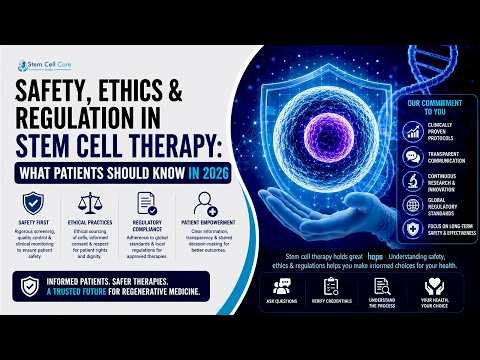
Safety, Ethics & Regulation in Stem Cell Therapy: What Patients Should Know in 2026 | Regeneration
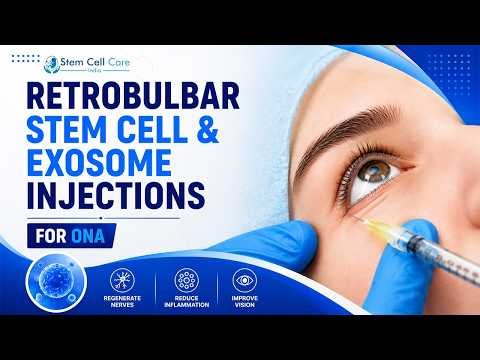
Retrobulbar Stem Cell & Exosome Injections: A New Frontier in Optic Nerve Atrophy Regeneration
Exosome Treatment for Optic Nerve Hypoplasia | Science & Patient Hope | Eye Regeneration
Frequently Asked Questions
Straight answers to what people usually ask about cell regeneration therapy.
What Is Cell Regeneration Therapy and How Does It Differ From Conventional Medical Treatment?+
Cell regeneration therapy utilizes biological cells such as stem cells and progenitor cells to regenerate damaged body tissue, as opposed to traditional pharmaceutical approaches that merely treat the symptoms. Regenerative methods of investigation are concerned with trying to correct the biological defect, not the symptom. Results may differ with each individual and each disorder. A specialist group will determine if regenerative medicine can be considered in addition to or following standard treatment protocols.
What is cell regeneration therapy?+
Cell regeneration therapy is an umbrella term for treatments including stem cell therapy, PRP, and exosome-based approaches, that aim to support the body's own tissue repair processes.
Is cell regeneration therapy the same as stem cell therapy?+
Stem cell therapy is one specific approach within the broader cell regeneration category, which also includes PRP and exosome-based treatment.
Can different regenerative approaches be combined?+
Yes, in some cases approaches are combined, depending on the condition and care plan.
How do I know which regenerative approach fits my condition?+
This is decided during a free medical evaluation, based on your specific condition and health history.
Is cell regeneration therapy proven to work?+
It remains an investigational field for most applications, meaning research is ongoing and outcomes are not guaranteed for any individual case.
What is exosome-based treatment?+
Exosome-based treatment uses small particles secreted by stem cells, which carry signalling molecules, rather than administering the stem cells themselves.
Can I read about exosome therapy for Retinal Detachment here?+
This page focuses on cell-level tissue regeneration, not on any one condition. For vision loss from a detached retina, see the dedicated Exosome Therapy for Retinal Detachment page.
Is cell regeneration therapy relevant to exosome therapy for Retinopathy?+
It can be. Exosome Therapy for Retinopathy is a separate regenerative option some patients researching retinal blood-vessel damage, often diabetes-related look into alongside cell regeneration therapy, assessed case-by-case during a free medical evaluation.
Do patients ask about exosome therapy for Diabetic Neuropathy when researching cell regeneration therapy?+
Some do. Patients reading about cell-level tissue regeneration sometimes also ask about Exosome Therapy for Diabetic Neuropathy, since nerve pain and numbness from diabetes is one area where exosome-based options are considered alongside standard protocols.
How does cell regeneration therapy connect to exosome therapy for Muscular Dystrophy?+
They're related but distinct. This page covers cell-level tissue regeneration, while Exosome Therapy for Muscular Dystrophy is a condition-specific treatment page for patients dealing with progressive muscle weakness; the clinical team can advise on how the two fit together.
Can I read about exosome therapy for Osteoporosis here?+
This page focuses on cell-level tissue regeneration, not on any one condition. For low bone density and fracture risk, see the dedicated Exosome Therapy for Osteoporosis page.
Is cell regeneration therapy relevant to exosome therapy for Parkinson’s Disease?+
It can be. Exosome Therapy for Parkinson’s Disease is a separate regenerative option some patients researching tremor, rigidity, and movement symptoms look into alongside cell regeneration therapy, assessed case-by-case during a free medical evaluation.
Do patients ask about exosome therapy for Rheumatoid Arthritis when researching cell regeneration therapy?+
Some do. Patients reading about cell-level tissue regeneration sometimes also ask about Exosome Therapy for Rheumatoid Arthritis, since autoimmune joint inflammation is one area where exosome-based options are considered alongside standard protocols.
How does cell regeneration therapy connect to exosome therapy for Sciatic Nerve Injury & Sciatica?+
They're related but distinct. This page covers cell-level tissue regeneration, while Exosome Therapy for Sciatic Nerve Injury & Sciatica is a condition-specific treatment page for patients dealing with sciatic nerve pain radiating down the leg; the clinical team can advise on how the two fit together.
Can I read about exosome therapy for Shoulder Injury here?+
This page focuses on cell-level tissue regeneration, not on any one condition. For rotator cuff and shoulder joint damage, see the dedicated Exosome Therapy for Shoulder Injury page.
Is cell regeneration therapy relevant to exosome therapy for Spinal Cord Injury?+
It can be. Exosome Therapy for Spinal Cord Injury is a separate regenerative option some patients researching loss of motor or sensory function after cord damage look into alongside cell regeneration therapy, assessed case-by-case during a free medical evaluation.
Do patients ask about exosome therapy for Spinal Muscular Atrophy when researching cell regeneration therapy?+
Some do. Patients reading about cell-level tissue regeneration sometimes also ask about Exosome Therapy for Spinal Muscular Atrophy, since motor-neuron loss and progressive weakness in SMA is one area where exosome-based options are considered alongside standard protocols.
How does cell regeneration therapy connect to exosome therapy for Sports Injuries?+
They're related but distinct. This page covers cell-level tissue regeneration, while Exosome Therapy for Sports Injuries is a condition-specific treatment page for patients dealing with soft-tissue and joint injuries from athletic activity; the clinical team can advise on how the two fit together.
Can I read about exosome therapy for Systemic Lupus here?+
This page focuses on cell-level tissue regeneration, not on any one condition. For autoimmune inflammation affecting multiple organs, see the dedicated Exosome Therapy for Systemic Lupus page.
Is cell regeneration therapy relevant to exosome therapy for Wound Healing?+
It can be. Exosome Therapy for Wound Healing is a separate regenerative option some patients researching slow-healing or chronic wounds look into alongside cell regeneration therapy, assessed case-by-case during a free medical evaluation.
See also:The science behind stem cell therapyMSCs explainedAbout stem cellsPlatelet-rich plasmaFunctional medical therapiesFull FAQ
Continue Exploring
Related reading, picked for this page.
About Us
Company Overview: What Stem Cell Care India Does
About Us.
Read more ScienceSupporting Your Body's Response to Stem Cell Therapy
Science.
Read more ScienceSuccess Rate of Stem Cell Therapy: An Honest Look
Science.
Read more Patient GuideTestimonials
Patient Guide.
Read more ResourceFrequently Asked Questions About Stem Cell Therapy…
Frequently asked questions.
Read more Get StartedAppointment
Book appointment stem cell care India.
Read moreAbout this guide: This page is written, reviewed, and medically approved as credited above. Content reflects the investigational status of stem cell and exosome applications under India's National Ethical Guidelines for Biomedical and Health Research (ICMR, 2017) and is not a substitute for individualized medical advice. See our full treatment disclaimer for details.
Keep exploringCompany Overview: What Stem Cell Care India DoesHow Does Stem Cell Therapy Work?How to Choose the Right Stem Cells for Your ConditionMesenchymal Stem Cells and the Blood-Brain Barrier
Explore related topics
More depth on the subjects covered in this guide.
Stem Cell Therapy
One approach within the regenerative family.
Platelet-Rich Plasma
Another commonly used regenerative approach.
Functional Medical Therapies
How regenerative therapy fits a whole-person plan.
Boosting Stem Cell Therapy
Supportive factors that work alongside regeneration.
Production of Stem Cells
The quality standards shared across approaches.
Stem Cell Activators
What they are, and where the evidence stands.
Still have a question?
Every case is different. A free medical evaluation gets you a direct, physician-reviewed answer for your specific condition — typically reviewed within about 7 working days.
Keep reading
Articles You May Interest
Watch
Related Videos


Ready to take the next step?
Talk to a case coordinator about your specific condition and treatment options.
24–48hFrom sending your reports to a doctor-reviewed answer
10,000+Patients treated across 65+ countries
4.9 / 5From 196+ verified Google reviews
Sources & Further Reading
Independent public sources for checking the evidence yourself. The PubMed and ClinicalTrials.gov links open live database searches, so results update as new research is published. Listing a source here is not an endorsement of any treatment.