


Skip to content
01
Watch

On Stem Cell Care India



Key takeaways
- Adipose tissue is one of the richest and most accessible sources of adult mesenchymal stem cells, harvested from the patient's own subcutaneous fat.
- Collection is done via a short mini-liposuction under local anaesthesia — far less invasive than a bone marrow aspiration.
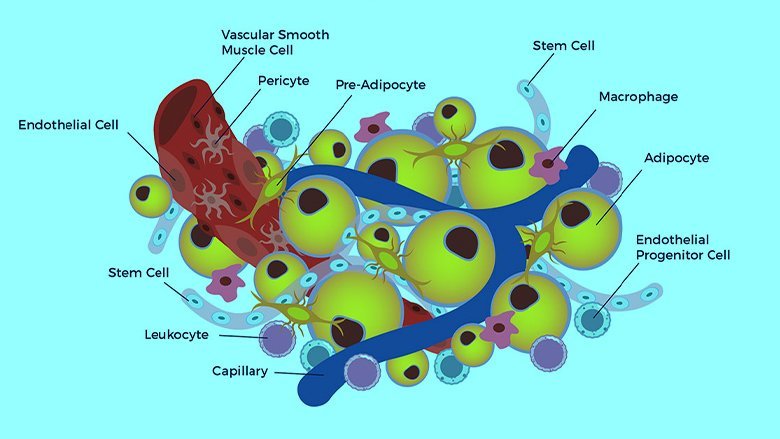
- The lipoaspirate is enzymatically processed to isolate the stromal vascular fraction (SVF), from which mesenchymal stem cells are obtained.
- At Stem Cell Care India, adipose-derived stem cells are used autologously, avoiding immune rejection and the ethical concerns tied to donor or embryonic sources.
Adipose Tissue Stem Cells — Quick Facts
| Aspect | What to know |
|---|---|
| Source | Patient's own subcutaneous fat tissue (abdomen, flank, or thigh) |
| Collection method | Mini-liposuction under local anaesthesia, roughly 50–100 ml of fat |
| Potency | Multipotent — mesenchymal stem cells with immunomodulatory and regenerative properties |
| Used in our treatments? | Yes — used autologously across multiple conditions at Stem Cell Care India |
How Adipose Tissue Stem Cells Are Sourced
Harvested from the patient's own fat through a short, minimally invasive procedure.
Adipose tissue stem cells are obtained from a patient's own subcutaneous fat — usually taken from the abdomen, flank, or thigh — through a short mini-liposuction performed under local anaesthesia, typically yielding 50 to 100 ml of lipoaspirate. The fat is then washed and enzymatically digested, most often with collagenase, to break down the tissue matrix and release the stromal vascular fraction (SVF): a heterogeneous mix of cells that includes adipose-derived mesenchymal stem cells, endothelial progenitor cells, and immune cells. The SVF is isolated by centrifugation and, depending on the protocol, either concentrated for near-immediate use in the same session or further cultured under GMP conditions to expand the mesenchymal stem cell population before administration.
01Why Adipose Tissue Is a Preferred Source
A high-yield, minimally invasive, autologous source used across many treatment protocols.
- Adipose tissue contains a far higher concentration of mesenchymal stem cells per millilitre than bone marrow, meaning fewer cells need to be harvested to obtain a clinically useful yield
- Collection via mini-liposuction is quicker, less painful, and lower-risk than a bone marrow aspiration, and is usually completed in under an hour under local anaesthesia
- Because the cells are autologous — the patient's own — there is no risk of immune rejection and no ethical or regulatory concerns of the kind associated with embryonic or donor sources
- Every cell product, whichever source it comes from, is processed under the same GMP standards; see production of stem cells
Frequently Asked Questions
What patients ask about adipose tissue stem cells.
Where are adipose tissue stem cells collected from?+
Adipose (fat) tissue stem cells are collected from the patient's own subcutaneous fat, usually from the abdomen, flanks, or thighs, through a short mini-liposuction procedure done under local anaesthesia. Only a small volume of fat, typically 50 to 100 ml, is needed.
How are stem cells extracted from fat tissue?+
The harvested fat (lipoaspirate) is washed and enzymatically digested, usually with collagenase, to release the stromal vascular fraction (SVF) — a mix of cells that includes adipose-derived mesenchymal stem cells. The SVF is isolated by centrifugation and, depending on the protocol, may be used directly or further cultured to expand the cell population before being prepared for administration.
Why is adipose tissue a preferred source of adult stem cells?+
Compared with bone marrow, adipose tissue yields a much higher concentration of mesenchymal stem cells per millilitre, the harvesting procedure is less invasive and less painful, and it can usually be done in under an hour under local anaesthesia. Adipose-derived stem cells also retain strong immunomodulatory and regenerative properties.
Are adipose-derived stem cells used autologously?+
Yes. At Stem Cell Care India, adipose-derived stem cells are used autologously — the patient's own fat tissue is collected, processed, and the resulting cells are administered back to the same patient, which avoids immune rejection and the ethical concerns associated with donor or embryonic sources.
Is adipose-derived stem cell therapy relevant to exosome therapy for Retinal Detachment?+
It can be. Exosome Therapy for Retinal Detachment is a separate regenerative option some patients researching vision loss from a detached retina look into alongside adipose-derived stem cell therapy, assessed case-by-case during a free medical evaluation.
Do patients ask about exosome therapy for Retinopathy when researching adipose-derived stem cell therapy?+
Some do. Patients reading about fat-derived stem cells sometimes also ask about Exosome Therapy for Retinopathy, since retinal blood-vessel damage, often diabetes-related is one area where exosome-based options are considered alongside standard protocols.
How does adipose-derived stem cell therapy connect to exosome therapy for Diabetic Neuropathy?+
They're related but distinct. This page covers fat-derived stem cells, while Exosome Therapy for Diabetic Neuropathy is a condition-specific treatment page for patients dealing with nerve pain and numbness from diabetes; the clinical team can advise on how the two fit together.
Can I read about exosome therapy for Muscular Dystrophy here?+
This page focuses on fat-derived stem cells, not on any one condition. For progressive muscle weakness, see the dedicated Exosome Therapy for Muscular Dystrophy page.
Is adipose-derived stem cell therapy relevant to exosome therapy for Osteoporosis?+
It can be. Exosome Therapy for Osteoporosis is a separate regenerative option some patients researching low bone density and fracture risk look into alongside adipose-derived stem cell therapy, assessed case-by-case during a free medical evaluation.
Do patients ask about exosome therapy for Parkinson’s Disease when researching adipose-derived stem cell therapy?+
Some do. Patients reading about fat-derived stem cells sometimes also ask about Exosome Therapy for Parkinson’s Disease, since tremor, rigidity, and movement symptoms is one area where exosome-based options are considered alongside standard protocols.
How does adipose-derived stem cell therapy connect to exosome therapy for Rheumatoid Arthritis?+
They're related but distinct. This page covers fat-derived stem cells, while Exosome Therapy for Rheumatoid Arthritis is a condition-specific treatment page for patients dealing with autoimmune joint inflammation; the clinical team can advise on how the two fit together.
Can I read about exosome therapy for Sciatic Nerve Injury & Sciatica here?+
This page focuses on fat-derived stem cells, not on any one condition. For sciatic nerve pain radiating down the leg, see the dedicated Exosome Therapy for Sciatic Nerve Injury & Sciatica page.
Is adipose-derived stem cell therapy relevant to exosome therapy for Shoulder Injury?+
It can be. Exosome Therapy for Shoulder Injury is a separate regenerative option some patients researching rotator cuff and shoulder joint damage look into alongside adipose-derived stem cell therapy, assessed case-by-case during a free medical evaluation.
Do patients ask about exosome therapy for Spinal Cord Injury when researching adipose-derived stem cell therapy?+
Some do. Patients reading about fat-derived stem cells sometimes also ask about Exosome Therapy for Spinal Cord Injury, since loss of motor or sensory function after cord damage is one area where exosome-based options are considered alongside standard protocols.
How does adipose-derived stem cell therapy connect to exosome therapy for Spinal Muscular Atrophy?+
They're related but distinct. This page covers fat-derived stem cells, while Exosome Therapy for Spinal Muscular Atrophy is a condition-specific treatment page for patients dealing with motor-neuron loss and progressive weakness in SMA; the clinical team can advise on how the two fit together.
Can I read about exosome therapy for Sports Injuries here?+
This page focuses on fat-derived stem cells, not on any one condition. For soft-tissue and joint injuries from athletic activity, see the dedicated Exosome Therapy for Sports Injuries page.
Is adipose-derived stem cell therapy relevant to exosome therapy for Systemic Lupus?+
It can be. Exosome Therapy for Systemic Lupus is a separate regenerative option some patients researching autoimmune inflammation affecting multiple organs look into alongside adipose-derived stem cell therapy, assessed case-by-case during a free medical evaluation.
Do patients ask about exosome therapy for Wound Healing when researching adipose-derived stem cell therapy?+
Some do. Patients reading about fat-derived stem cells sometimes also ask about Exosome Therapy for Wound Healing, since slow-healing or chronic wounds is one area where exosome-based options are considered alongside standard protocols.
See also: Mesenchymal Stem Cell Therapy Stromal Vascular Fraction (SVF) Cells Why Mesenchymal Stem Cells Production of Stem Cells Sources of Adult Stem Cells Types of Stem Cells Treatment Disclaimer
Want the science explained for your specific case?
Send your diagnosis and reports and our medical team will explain how the research applies to you — free, no obligation.
Related Videos
More videos from the Stem Cell Care India team and our patients.
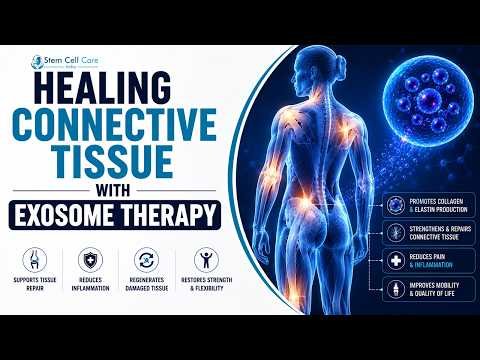
Healing Connective Tissue with Exosome Therapy | Tendons, Ligaments & Cartilage
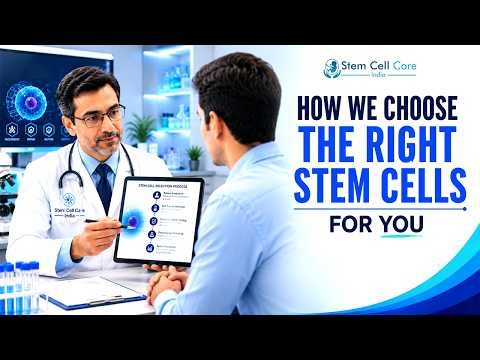
How Do We Choose The Right Stem Cells For Each Patient?
How to Choose the Right Stem Cell Clinic in India
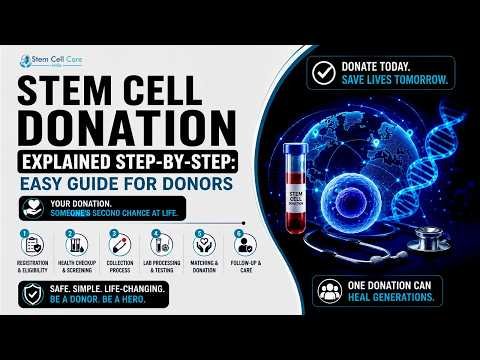
Stem Cell Donation Explained Step-by-Step | Easy Guide for Donors | Life-Saving Procedure 2026
Continue Exploring
Related reading, picked for this page.
Stem Cell Therapy
Stromal Vascular Fraction (SVF) Cells Explained
Stromal vascular fraction svf cells.
Read more ScienceSources of Adult Stem Cells: Bone Marrow, Fat, Blood & Cord
Sources of adult stem cells.
Read more Stem Cell TherapyMesenchymal Stem Cell Therapy
Mesenchymal stem cell therapy in India.
Read more Patient GuideTestimonials
Patient Guide.
Read more ResourceFrequently Asked Questions About Stem Cell Therapy…
Frequently asked questions.
Read more Get StartedAppointment
Book appointment stem cell care India.
Read more
About this guide: This page is written, reviewed, and medically approved as credited above. Content reflects the investigational status of stem cell and exosome applications under India's National Ethical Guidelines for Biomedical and Health Research (ICMR, 2017) and is not a substitute for individualized medical advice. See our full treatment disclaimer for details.
Keep exploringEpidural Stimulation Treatment: How It Works for Select Spinal Cord Injury CasesSpinal Cord Injury Walking Track: A Structured Mobility Program5 Myths About Stem Cells: What Science Actually SaysAbout Your Condition: How We Review Your CaseAdverse Effects of Stem Cell Therapy: What's Reported
Explore related topics
More depth on the subjects covered in this guide.
Mesenchymal Stem Cell Therapy
The most-studied adult stem cell type explained.
Stromal Vascular Fraction (SVF) Cells
The cell mix released from processed fat tissue.
Why Mesenchymal Stem Cells
Why MSCs are the default cell choice.
Production of Stem Cells
How cells are sourced, isolated, and GMP-processed.
Types of Stem Cells
Embryonic, adult, and iPSC stem cells compared.
Sources of Adult Stem Cells
Bone marrow, fat, blood, and cord tissue compared.
Stem Cell Therapy Glossary
Every key term defined in plain English.
Stem Cell Collection
The four main collection methods, step by step.
Still have a question?
Every case is different. A free medical evaluation gets you a direct, physician-reviewed answer for your specific condition — typically reviewed within about 7 working days.
Keep reading
Articles You May Interest
Watch
Related Videos


Ready to take the next step?
Talk to a case coordinator about your specific condition and treatment options.
24–48hFrom sending your reports to a doctor-reviewed answer
10,000+Patients treated across 65+ countries
4.9 / 5From 196+ verified Google reviews
Sources & Further Reading
Independent public sources for checking the evidence yourself. The PubMed and ClinicalTrials.gov links open live database searches, so results update as new research is published. Listing a source here is not an endorsement of any treatment.