


Skip to content
01
02
Watch
On Stem Cell Care India



Quick answer
Aqua therapy is water-based rehabilitation exercise, using water's buoyancy to reduce joint loading and its resistance to build strength, guided by a physiotherapist. It is offered for patients whose condition or recovery stage benefits from lower-impact movement than land-based exercise allows.
Aqua Therapy — Quick Facts
| Aspect | What to expect |
|---|---|
| How it works | Water's buoyancy reduces joint loading; water resistance builds strength |
| Guided by | A physiotherapist trained in aquatic rehabilitation |
| Common candidates | Patients with joint sensitivity or limited weight-bearing tolerance |
| Common pairing | Land-based physiotherapy and broader rehabilitation |
| Setting | A supervised therapy pool |
| Outcome guarantee | None — response and progression vary by condition and individual |
On this page — 2 topics
01What Aqua Therapy Involves
Topic 01 of 2Skip ahead: Who Aqua Therapy Typically Helps
The short answer, before the detail below.
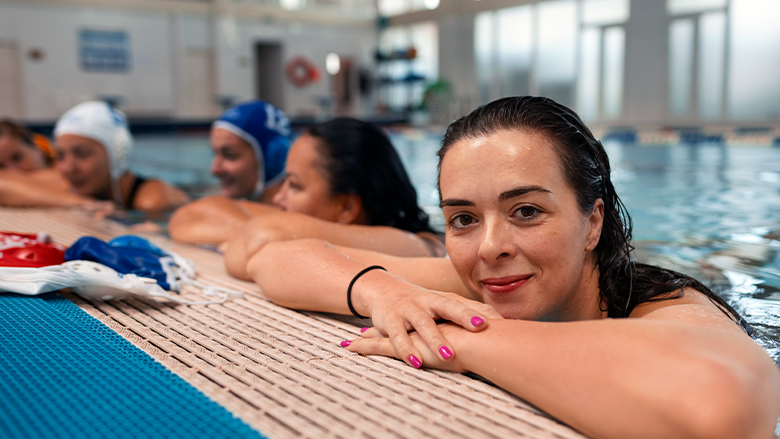
Hydrotherapy, or Aqua therapy, is a form of treatment that utilizes the application of water to aid patients in their rehabilitation from injury, surgery, or illness. With the use of aquatic exercises, the body experiences less muscle and joint stress, and movement becomes effortless and pain-free. Support from water buoyancy offers assistance to the body, and resistance helps to build up strength, flexibility, and balance. Aqua therapy is especially beneficial for those who are recovering after injury, neurological diseases, or surgery. It also provides emotional comfort, making therapy fun and less intimidating for young patients. Conditions like fibromyalgia, chronic back pain, or postural problems often make exercise difficult; the warmth and buoyancy of water help relax tense muscles and ease pain, while gentle water exercises improve flexibility, endurance, and mood.
We offer aqua therapy with a specially designed pool and experienced professionals to improve people's balance, muscle strength, and body mechanics. India provides high-grade aqua therapy at a fraction of the price in comparison to most other nations. The patients are provided with expert treatment in well-equipped therapy pools and rehab facilities without having to pay hefty prices. The nation has highly skilled physiotherapists and rehabilitation professionals. The therapists take special care in planning and observing every session to ensure safety and proper recovery. Aqua therapy is also provided in most top hospitals, clinics, and rehab centers across the nation.
The heat of the pool eases strained muscles and enhances blood circulation, which aids in healing. Compared to land-based physiotherapy, aqua therapy minimizes the stress caused by gravity. It is safer and more relaxed for patients experiencing weakness, balance issues, or pain. Aqua therapy is particularly beneficial for individuals with arthritis, back issues, or post-surgery, as it provides an easy yet effective way towards rehabilitation. Aquatic therapy is crucial in rehabilitation following stem cell treatment. India's aqua therapy is frequently integrated with physiotherapy, occupational therapy, and even treatments such as stem cell therapy. The method combines several techniques to support faster recovery and long-term health.
Treatment Disclaimer: We provide consultation, case evaluation, and patient support services in the field of regenerative medicine. As per current medical guidelines in India, stem cell-based interventions (other than approved indications) are considered investigational and are available only within regulated clinical research settings. For patients exploring broader options, we also assist in facilitating access to treatment pathways, including internationally accredited centers where different regulatory frameworks may apply.
02Who Aqua Therapy Typically Helps
Topic 02 of 2
Common situations raised during evaluation.
- Patients with joint sensitivity where land-based exercise is uncomfortable
- Patients with limited weight-bearing tolerance, such as early-stage mobility recovery
- Patients working on balance and coordination in a lower-risk environment
- Patients also receiving land-based physiotherapy as part of a combined plan
Related Videos
More videos from the Stem Cell Care India team and our patients.
Exosome Therapy for Spinal Cord Injury: Can It Help Restore Nerve Function?
The Patient from Manipur, Physiotherapy session for Spinal cord injury at SCCI | Stem Cell Therapy
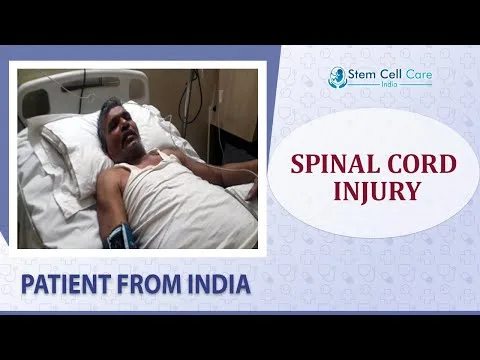
Patient with Spinal Cord Injury shares his experience at SCCI| Stem Cell Therapy for SCI in India
Patient with Spinal Cord Injury shares his experience after stem cell therapy - Stem Cell Care…
See also:Supportive Therapiesphysiotherapyrehabilitation programstem cell therapyDisclaimer
Continue Exploring
Related reading, picked for this page.
Supportive Therapy
Physiotherapy in India: Rebuilding Strength,…
Physiotherapy in India.
Read more Supportive TherapyRehabilitation Therapy in India: The Complete Framework
Rehabilitation therapy in India.
Read more Supportive TherapyExosome Therapy in India: How It Works & What…
Exosome therapy in India.
Read more Patient GuideTestimonials
Patient Guide.
Read more ScienceThe Science Behind Stem Cell Therapy
Science of stem cell therapy.
Read more Get StartedAppointment
Book appointment stem cell care India.
Read more
About this guide: This page is written, reviewed, and medically approved as credited above, and is not a substitute for individualized medical advice. See our full treatment disclaimer for details.
Keep exploringPhysiotherapy in India: Rebuilding Strength, Mobility & FunctionRehabilitation Therapy in India: The Complete FrameworkSpinal Cord Injury Walking Track: A Structured Mobility Program
Explore related topics
More depth on the subjects covered in this guide.
Supportive Therapies
The full rehabilitation ecosystem overview.
Physiotherapy in India
Rebuilding strength, mobility, and physical function.
Occupational Therapy in India
Rebuilding independence in daily activities.
Rehabilitation Therapy in India
The broader rehabilitation framework.
Spinal Cord Injury Walking Track
A specialized mobility program for eligible patients.
Platelet-Rich Plasma (PRP) Therapy
Concentrating a patient's own platelets to support repair.
Still have a question?
Every case is different. A free medical evaluation gets you a direct, physician-reviewed answer for your specific condition — typically reviewed within about 7 working days.
Keep reading
Articles You May Interest
Watch
Related Videos


Ready to take the next step?
Talk to a case coordinator about your specific condition and treatment options.
24–48hFrom sending your reports to a doctor-reviewed answer
10,000+Patients treated across 65+ countries
4.9 / 5From 196+ verified Google reviews
Sources & Further Reading
Independent public sources for checking the evidence yourself. The PubMed and ClinicalTrials.gov links open live database searches, so results update as new research is published. Listing a source here is not an endorsement of any treatment.