


Skip to content
01
02
Watch



On Stem Cell Care India




Key takeaways
- Stem cells fall into three broad categories: embryonic, adult (somatic), and induced pluripotent (iPSCs).
- Adult stem cells are further divided by source: bone marrow, adipose (fat) tissue, peripheral blood, and umbilical cord tissue/blood.
- Stem Cell Care India uses only adult and consented umbilical-cord-derived cells — never embryonic or fetal cells.
- Each type differs in how flexible ('potent') it is and how it is typically sourced and processed.
Types of Stem Cells — Quick Facts
| Aspect | What to expect |
|---|---|
| Embryonic stem cells | Pluripotent; sourced from early-stage embryos. Not used by SCCI |
| Adult (somatic) stem cells | Multipotent; sourced from bone marrow, fat, blood, or cord tissue. Used by SCCI |
| Induced pluripotent stem cells (iPSCs) | Adult cells reprogrammed in a lab to behave like embryonic cells; largely a research tool |
| Autologous vs allogeneic | From the patient's own body vs. from a consented donor source such as cord tissue |
| SCCI's sources | Bone marrow, adipose tissue, peripheral blood, consented umbilical cord tissue |
01What Types of Stem Cells Are Used in Investigational Regenerative Medicine and How Do They Differ?
Topic 01 of 2Skip ahead: What Stem Cell Care India Uses
Stem cells that have been studied for investigational purposes are embryonic, induced pluripotent, hematopoietic, and mesenchymal stem cells, which all vary in their potency, origin, and application. Multipotent adult stem cells like MSCs and hematopoietic stem cells are the ones that are usually used because of their well-proven safety records and compatibility. The choice of cell type is influenced by the disease treated and evaluated in a multidisciplinary manner.
Type of Stem Cells
Stem cells can self-renew to make more stem cells or differentiate to form specialized cell types such as muscle cells, skin cells, nerve cells and fat cells. When a stem cell divides, three different cell types are formed having unique characteristics.
- Embryonic stem cell
- Tissue or Adult stem cell
- Induced pluripotent stem cell (iPSC)
Embryonic stem cells and adult stem cells have different abilities in the number and type of specialized cell types they can become. While embryonic stem cells can become many different types of cells in the body because it is pluripotent, adult stem cells can differentiate to form different cell types of the tissue of their origin only.
Induced Pluripotent Stem Cells (iPSCs) are genetically reprogrammed to express genes and factors vital for sustaining the unique properties of embryonic stem cells.
Stem Cells and Their Types That Are Used in Treatment
1. Adult or Tissue-Specific Stem Cells
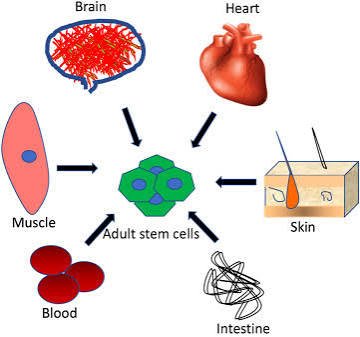
Adult or tissue-specific stem cells are cells that reside in the body tissues of the grown-up body such as bone marrow, fat, blood, and skin. These cells are multipotent, i.e., they can become only a few types of cells that are the derivatives of the same tissue.
Example: Hematopoietic stem cells differentiate into various types of blood cells; mesenchymal stem cells differentiate into bone, cartilage, and fat cells.
Advantages: They are a natural component of the body, participate in the repair and regeneration of damaged tissues, have a lesser probability of causing immune rejection, and do not come with a major ethical problem that is typical of other stem cell types.
2. Induced Pluripotent Stem Cells (iPSCs)
Induced pluripotent stem cells (iPSCs) are essentially cells that have been engineered through reprogramming to behave like embryonic stem cells. The technique makes them developmental cells as they attain the pluripotency, a property that allows them to be converted to almost any other cell type in the human body. They are genetically similar to embryonic stem cells, but are derived from adult cells, not embryos. iPSCs have great potential in the field of science: they enable scientists to understand diseases, drug trials, and patient-specific therapy possibilities, and being non-embryonic in origin, they are free from most of the contentious issues associated with the use of embryonic stem cells.
3. Bone Marrow Stem Cells
Bone marrow stem cells are special cells that live inside bones. They can create new blood cells and help the body heal. Doctors often use them to treat serious blood diseases. Key features: found inside the soft tissue of bones; can make many types of blood cells; help the body repair and grow new cells; used in treatments like bone marrow transplants; important for the immune system.
Have a question about your own case?Share your medical reports for a free, doctor-reviewed opinion — no obligation.
4. Umbilical Cord Tissue Stem Cells
Umbilical cord tissue stem cells are biologically versatile cells that have the potential to develop into various human tissues. They are a straightforward postnatal collection and can be banked for later therapeutic applications. A large number of people decide to keep them on hand because these cells might be useful in the repair of an area that has been injured or the treatment of a disease at a later time. Key features: collected after birth from the umbilical cord; rich source of mesenchymal stem cells (MSCs); have the potential to regenerate tissue, bone, muscle, and skin; collection is simple and without any risk; preserved for medical use later.
5. Umbilical Cord Blood Stem Cells
These are potent cells which are derived from the umbilical cord of a newborn after delivery. Over the years they have been used to cure different kinds of diseases and maybe in the future, they will be used in medical treatment that we don't know yet. After a baby's birth, the cords connected to the baby are cut and the cells are taken from there. These are cells which are extremely rare and hence valuable, and can possibly be used to help in some blood and immune system disorders. The procedure of collecting these cells is very simple and without causing any pain to a baby, and these cells can be preserved to be used later in medical treatments.
Comparing Stem Cell Types:
| Stem Cell Type | Potency | Source | Differentiation Ability | Applications |
|---|---|---|---|---|
| Adult / Tissue-Specific Stem Cells | Multipotent | Organs and tissues | Make only cell types from their own tissue | Tissue repair, some therapies |
| iPSCs | Pluripotent | Reprogrammed adult cells | Can become almost any cell type | Research, disease models, future therapies |
| Bone Marrow Stem Cells | Multipotent | Bone marrow | Mostly blood and immune cells | Treat blood cancers, immune disorders |
| Umbilical Cord Tissue Stem Cells | Multipotent | Cord tissue (Wharton's jelly) | Mostly cartilage, bone, and connective cells | Regenerative medicine, trials |
| Umbilical Cord Blood Stem Cells | Multipotent | Blood in umbilical cord | Blood and immune cells | Treat blood diseases, transplants |
Why Understanding Stem Cell Types Matters
Knowing about different stem cells types is very crucial since each has its own special role in healing and repair. When we are aware of their working mechanisms, we can make more informed decisions in medicine and research.
- Choosing the Appropriate Treatment for Particular Diseases. Different illnesses or injuries may require different kinds of stem cells. As a matter of fact, some stem cells could be the right ones for nerve repair, while others might be the best for joints. The knowledge of the correct one helps the medical staff in making the right treatment that suits the exact condition of the patient.
- Creating Personalized Regenerative Therapies. Human bodies are different from one another. With our understanding of stem cell types, we are able to produce the treatments that correspond with the patient's own biology. This can result in the therapy being more effective and lessening the chances of side effects.
- Opening Up Research Possibilities in Degenerative Diseases. Understanding of different stem cells by scientists enables them to study diseases that result in tissue damage, such as Parkinson's, spinal cord injuries, or diabetes. By discovering ways in which stem cells develop and mature, researchers get the opportunity to find new methods of slowing down or reversing these types of disorders.
- Making Treatment Methods Safer and More Effective. The correct stem cell use is one of the factors that support treatment safety. Positive results are more likely to occur as well since the therapy is based on a thorough scientific understanding rather than a mere guess.
02What Stem Cell Care India Uses
Topic 02 of 2
A clear, ethical sourcing policy applied to every case.
Stem Cell Care India uses only autologous cells (the patient's own bone marrow, fat, or blood) or allogeneic cells from consented umbilical cord tissue. Embryonic or fetal stem cells are not used in any treatment, in line with our treatment disclaimer and India's ICMR ethical framework.
FAQs
Q1. What are the different types of stem cells?+
Ans: Stem cells are categorized as embryonic stem cells (ESCs), adult/tissue-specific stem cells, and induced pluripotent stem cells (iPSCs), each with unique regenerative abilities.
Q2. Which stem cells can become almost any cell types?+
Ans: Embryonic stem cells and iPSCs are pluripotent, able to differentiate into nearly any human cell type, providing expansive possibilities for developmental research and regenerative therapies.
Q3. What are adult stem cells?+
Ans: Adult stem cells exist in tissues like bone marrow, fat, and blood. They are multipotent, forming only the types of cells found in their tissue of origin.
Q4. How are iPSCs different from embryonic stem cells?+
Ans: iPSCs are reprogrammed adult cells that act like embryonic stem cells. They offer similar potential but avoid ethical concerns.
Q5. Which stem cells are commonly used in therapies?+
Ans: Adult stem cells (e.g., MSCs and HSCs) are widely used in clinical therapies due to safety, availability, and lower risk of immune rejection.
Q6. Is stem cell therapy safe?+
Ans: When performed under strict medical protocols, procedures ensure patient safety, maintain sterility, adhere to quality standards, and minimize risks, promoting effective, reliable, and ethical healthcare outcomes.
Q7. Can stem cells naturally repair damaged tissue?+
Ans: Yes. Adult stem cells play a role in natural tissue repair, activating after injury to regenerate blood, skin, bone, and other tissues.
Q8. Why are iPSCs important in research?+
Ans: iPSCs allow disease modeling, drug testing, and personalized medicine development without ethical issues.
Q9. Do all stem cells have the same capabilities?+
Ans: No. Pluripotent stem cells (ESCs and iPSCs) can form almost any cell type, while multipotent adult stem cells are limited to their tissue of origin.
Q10. How are different stem cells applied in medicine?+
Ans: ESCs: research and experimental therapies. Adult stem cells: regenerative treatments, transplants. iPSCs: disease modeling, drug development, personalized therapies.
See also: Umbilical Cord Stem Cell Therapy Fat-Derived Stem Cell Injections Bone Marrow-Derived Injections Mesenchymal Stem Cell Therapy Stem Cell Therapy Glossary Production of Stem Cells Amniotic-Derived Activator Injections Stromal Vascular Fraction (SVF)
Ready to find out if you're a candidate?
Share your diagnosis and reports and our medical team will get back with a free, doctor-reviewed opinion — no obligation.
Related Videos
More videos from the Stem Cell Care India team and our patients.
Free Second Opinion: How to Challenge a \"Nothing More Can Be Done\" Diagnosis
Alzheimer's Disease Types | Best Stem Cell Center In Delhi For Alzheimer's
Neuropathy Types | Best Treatment For Neuropathy | Stem Cell Therapy In Neuropathy | Neuro Disorder
Types Of Parkinson’s Disease | Stem Cell Treatment For Parkinson's
Watch
4 ShortsQuick Video Answers: How Stem Cell Treatment Works
Short vertical videos from our YouTube channel on how stem cell treatment works.
Autologous vs Allogeneic Stem Cells — Which Type Does Stem Cell Care India Use and Why
Watch on YouTubeCell Viability vs Raw Cell Count — The Quality Metric Most Clinics Never Mention
Watch on YouTubeIV infusion vs intrathecal vs local injection — how the delivery route is chosen for each patient…
Watch on YouTubeAutologous vs. Allogeneic Stem Cells: Which Is Right for Which Condition?
Watch on YouTubeBrowse all Stem Cell Care India Shorts
Educational content only. Patient stories are individual experiences; results vary from person to person and are not a promise of outcome or a substitute for advice from your treating doctor.
Continue Exploring
Related reading, picked for this page.
Science
Totipotent and Pluripotent Stem Cells: The Potency…
Science.
Read more Stem Cell TherapyAmniotic-Derived Stem Cell Activator Injections
Amniotic derived stem cell activator injections.
Read more Stem Cell TherapyBone Marrow-Derived Stem Cell Injections
Bone marrow derived stem cell injections.
Read more ScienceThe Science Behind Stem Cell Therapy
Science of stem cell therapy.
Read more Patient GuideStem cell treatment in India: costs, care tiers,…
International patient guide.
Read more Get StartedAppointment
Book appointment stem cell care India.
Read more
About this guide: This page is written, reviewed, and medically approved as credited above. Content reflects the investigational status of stem cell and exosome applications under India's National Ethical Guidelines for Biomedical and Health Research (ICMR, 2017) and is not a substitute for individualized medical advice. See our full treatment disclaimer for details.
Keep exploringTotipotent and Pluripotent Stem Cells: The Potency SpectrumProduction of Stem CellsHow to Choose the Right Stem Cells for Your ConditionMesenchymal Stem Cells and the Blood-Brain Barrier5 Myths About Stem Cells: What Science Actually Says
Explore related topics
More depth on the subjects covered in this guide.
Umbilical Cord Stem Cell Therapy
Donor-sourced MSCs with no collection procedure.
Fat-Derived Stem Cell Injections
Mini-liposuction collection, high MSC yield.
Bone Marrow-Derived Injections
Collection and use of marrow-derived MSCs.
Mesenchymal Stem Cell Therapy
The most-studied adult stem cell type explained.
Stem Cell Therapy Glossary
Every key term defined in plain English.
Production of Stem Cells
How cells are sourced, isolated, and GMP-processed.
Stem Cell Therapy Overview
What stem cell therapy is and who typically considers it.
Still have a question?
Every case is different. A free medical evaluation gets you a direct, physician-reviewed answer for your specific condition — typically reviewed within about 7 working days.
Keep reading
Articles You May Interest
Watch
Related Videos


Ready to take the next step?
Talk to a case coordinator about your specific condition and treatment options.
24–48hFrom sending your reports to a doctor-reviewed answer
10,000+Patients treated across 65+ countries
4.9 / 5From 196+ verified Google reviews
Sources & Further Reading
Independent public sources for checking the evidence yourself. The PubMed and ClinicalTrials.gov links open live database searches, so results update as new research is published. Listing a source here is not an endorsement of any treatment.