


Skip to content
01
02
03
04
05
06
07
08
09
Watch

On Stem Cell Care India



Quick answer
Every person is born with a natural reserve of adult stem cells, distributed across tissues like bone marrow, skin, and muscle. The body draws on this reserve constantly for everyday cell turnover and more heavily after injury, but the reserve isn't regularly replenished from outside — and its size and function naturally decline with age, illness, and lifestyle factors.
The Body's Stem Cell Reserve — Quick Facts
| Aspect | What to know |
|---|---|
| Where the reserve lives | Bone marrow, skin, gut lining, muscle, and other tissue-specific "niches" |
| What draws on it | Everyday cell turnover (skin, blood, gut lining) and repair after injury or illness |
| What shrinks it | Aging, chronic disease, smoking, and cumulative injury or illness |
| Why it matters for treatment | Autologous (your own) stem cell therapy draws from this same natural reserve |
On this page — 9 topics
- What "stem cell bank account" means
- Where the body keeps its reserve
- Deposits and withdrawals
- Why the balance declines with age
- Factors that affect your reserve
- Cord blood banking: a different kind of deposit
- What this means for stem cell therapy
- Supporting your natural reserve
- A simple way to think about it
- Frequently asked questions
01What "Stem Cell Bank Account" Means
Topic 01 of 9Skip ahead: Where the Body Keeps Its Reserve
A helpful metaphor for a real biological system.
Every person is born with a natural supply of adult stem cells distributed across the body — in bone marrow, skin, the gut lining, muscle, and other tissues. Think of it like a bank account: the body makes small, constant "withdrawals" from this reserve every day to replace worn-out skin cells, blood cells, and gut lining cells, and larger withdrawals after an injury or illness that needs repair.
Unlike a financial account, this reserve isn't topped up by outside deposits under normal circumstances — the body maintains it through the stem cells' own ability to divide and renew themselves (called self-renewal). But like any account that's drawn on more than it's replenished, the balance can decline over time, which is central to understanding aging, healing capacity, and how stem cell therapy fits in.
02Where the Body Keeps Its Reserve
Stem cell "niches" exist throughout the body, not in one central location.
Rather than one central vault, the body keeps its stem cell reserve in specialized microenvironments called niches, spread across different tissues:
- Bone Marrow: Houses hematopoietic stem cells (which become blood cells) and mesenchymal stem cells (which support bone, cartilage, and connective tissue repair).
- Skin: Basal layer stem cells continuously replace skin cells shed from the surface.
- Gut Lining: Among the fastest-renewing tissues in the body, replaced every few days by intestinal stem cells.
- Muscle: Satellite cells sit alongside muscle fibers, activating to repair damage after exercise or injury.
- Fat (Adipose) Tissue: A particularly rich source of mesenchymal stem cells, which is part of why it's a common collection site for autologous therapy.
03Deposits and Withdrawals: How the Body Uses Its Reserve
Topic 03 of 9Skip ahead: Why the Balance Declines With Age
Two kinds of activity draw on the same underlying reserve.
- Everyday Turnover: Skin, blood, and gut lining cells wear out and die (a normal process called apoptosis) and are continuously replaced by resident stem cells — a small, steady "withdrawal" that happens every day of life.
- Injury and Illness Repair: A larger, sudden "withdrawal" happens after trauma, surgery, infection, or disease, when stem cells are called on to help repair damaged tissue faster than routine turnover requires.
- No Outside "Deposits": Under normal circumstances, the body doesn't receive fresh stem cells from outside — it relies on the existing pool renewing itself through cell division, which is why the balance can run down over time.
04Why the Balance Declines With Age
Topic 04 of 9Skip ahead: Factors That Affect Your Reserve
A natural part of aging, not a disease in itself.
1. Fewer Active Stem Cells
The number of functional stem cells in key niches, like bone marrow and muscle, gradually declines over the decades, a process researchers call stem cell exhaustion.
2. Slower, Less Complete Repair
Remaining stem cells often divide more slowly and become less responsive to repair signals, which is part of why wounds heal more slowly and recovery takes longer as people age.
Have a question about your own case?Share your medical reports for a free, doctor-reviewed opinion — no obligation.
3. Cellular Senescence
Some aging stem cells enter a dormant state called senescence, where they stop dividing but remain present, contributing to chronic low-grade inflammation.
4. A Recognized Hallmark of Aging
Stem cell exhaustion is one of the well-established biological hallmarks of aging, alongside other cellular-level changes, studied extensively in aging and longevity research.
05Factors That Affect Your Reserve
Some are outside your control; others can be influenced through lifestyle.
Beyond simple aging, several factors influence how well-stocked and functional a person's stem cell reserve is:
- Chronic Disease: Conditions like diabetes can impair the bone marrow niche and reduce the number of functional circulating stem cells.
- Smoking and Alcohol Use: Both are associated with reduced stem cell function and accelerated cellular aging.
- Diet and Exercise: Regular physical activity and good nutrition are associated with healthier stem cell niches and better repair capacity in research studies.
- Cumulative Injury or Illness: Frequent or severe tissue damage draws more heavily on the reserve over a lifetime, which is part of why extensive prior injury can affect healing capacity later on.
- Oxidative Stress: Ongoing cellular stress from inflammation or environmental exposures can damage stem cells over time, reducing their long-term function.
06Cord Blood Banking: A Different Kind of Deposit
Topic 06 of 9Skip ahead: What This Means for Stem Cell Therapy
A literal, one-time deposit rather than the body's own natural reserve.
Separate from the body's own endogenous reserve, some families choose to bank their baby's umbilical cord blood at birth — a literal, external deposit into cryogenic storage for possible future use. Because cord blood is unusually rich in stem cells and can only be collected at the moment of birth, this is a one-time opportunity that doesn't apply to the body's ongoing internal reserve discussed above.
See our dedicated page on Umbilical Cord Blood Stem Cells for more detail on how this collection and storage process works.
07What This Means for Stem Cell Therapy
Topic 07 of 9Skip ahead: Supporting Your Natural Reserve
Autologous therapy draws on the very reserve described above.
When a patient undergoes autologous stem cell therapy, the cells used are collected directly from their own reserve — typically from bone marrow or fat tissue. This has a few practical implications worth understanding:
Age and Health Can Affect Yield
Because the reserve naturally declines with age and certain chronic conditions, older patients or those with conditions like diabetes may yield fewer or less potent cells from a given collection.
Screening Matters
Pre-treatment screening helps assess whether a patient's own reserve is likely to provide a good quality sample, which is why medical evaluation happens before any collection.
Have a question about your own case?Share your medical reports for a free, doctor-reviewed opinion — no obligation.
It's a Loan, Not a Withdrawal From Nowhere
Collecting cells for treatment is, in effect, drawing early on a small portion of an existing reserve — it doesn't create new stem cells beyond what the body already has.
Lifestyle Support Still Matters
Supporting the body's broader reserve through good sleep, nutrition, and exercise around the time of treatment is a reasonable, low-risk complement to any stem cell procedure.
08Supporting Your Natural Reserve
Topic 08 of 9Skip ahead: A Simple Way to Think About It
General wellness habits associated with healthier stem cell function in research.
- Regular Exercise: Physical activity is associated with better stem cell niche function and muscle repair capacity in research studies.
- Balanced Nutrition: Adequate protein, vitamins, and antioxidants support the cellular environment stem cells rely on to function well.
- Avoiding Smoking: Smoking is one of the most consistently documented factors associated with reduced stem cell function and accelerated cellular aging.
- Quality Sleep: Sleep supports the body's overall repair and renewal processes, including tissue turnover that depends on stem cell activity.
- Managing Chronic Conditions: Keeping conditions like diabetes and high blood pressure well controlled helps protect the bone marrow and other niches from cumulative damage.
09A Simple Way to Think About It
Topic 09 of 9
The metaphor, in a nutshell.
Picture the body's stem cell supply as a savings account opened at birth. Small, automatic withdrawals happen every day to keep skin, blood, and gut lining fresh. Larger withdrawals happen after an injury or illness. There are no regular outside deposits — the account relies on its own cells dividing to replenish themselves — and, like most accounts that are used more than they're topped up, the balance tends to shrink with age, illness, and certain lifestyle factors.
Understanding this helps explain both why healing capacity changes over a lifetime, and why factors like age and health status matter when a patient's own cells are collected for autologous stem cell therapy.
Treatment Disclaimer: We provide consultation, case evaluation, and patient support services in the field of regenerative medicine. As per current medical guidelines in India, stem cell-based interventions (other than approved indications) are considered investigational and are available only within regulated clinical research settings. For patients exploring broader options, we also assist in facilitating access to treatment pathways, including internationally accredited centers where different regulatory frameworks may apply.
Want the science explained for your specific case?
Send your diagnosis and reports and our medical team will explain how the research applies to you — free, no obligation.
Related Videos
More videos from the Stem Cell Care India team and our patients.
Stem Cell for Poor Ovarian Reserve & Premature Ovarian Failure | Testimonial from a Kenyan Patient
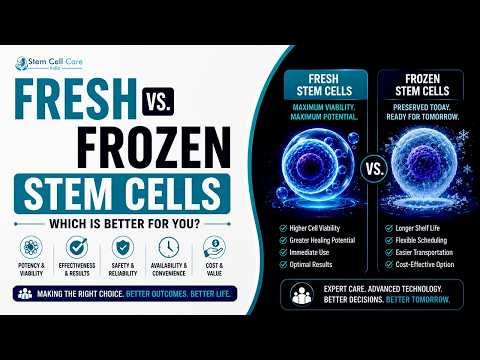
Fresh vs Frozen Stem Cells: Which Works Better?
How Stem Cells Heal, Repair & Renew the Human Body | What Stem Cells Really Do
Exosome Therapy for Motor Neuron Disease: How It Works & Real Benefits
Frequently Asked Questions
Straight answers to what people usually ask about stem cells.
What does "the body's stem cell bank account" actually mean?+
It's a metaphor for the body's natural, self-renewing supply of adult stem cells, held in tissue-specific niches like bone marrow, skin, and muscle, which is drawn on daily for cell turnover and more heavily after injury or illness.
Does the reserve ever get "topped up" from outside?+
Not under normal biological circumstances — the body relies on existing stem cells dividing to renew themselves. The one exception is a donor stem cell transplant (allogeneic), which introduces cells from another person.
Why does healing slow down as people get older?+
Stem cell numbers and function in key niches decline with age, a process researchers call stem cell exhaustion, one of the well-documented biological hallmarks of aging.
Can I do anything to protect my own reserve?+
Yes, to some extent. Regular exercise, balanced nutrition, avoiding smoking, quality sleep, and managing chronic conditions like diabetes are all associated with healthier stem cell function in research, though none of these can fully reverse age-related decline.
Where in the body is this reserve kept?+
In specialized microenvironments called niches spread across different tissues, including bone marrow, skin, the gut lining, muscle, and fat (adipose) tissue.
How is cord blood banking different from the body's natural reserve?+
Cord blood banking is a one-time, literal deposit into external cryogenic storage at birth, separate from the body's own ongoing internal reserve described on this page.
Does SCCI use embryonic stem cells?+
No, SCCI's treatments use adult stem cells from the patient's own body or consented umbilical cord tissue, never embryonic or fetal cells.
Does age or health status affect stem cell collection for treatment?+
Yes. Because the reserve naturally declines with age and certain chronic conditions, older patients or those with conditions like diabetes may yield fewer or less potent cells from a given collection.
Do patients ask about exosome therapy for Retinal Detachment when researching the body's natural stem cell reserve?+
Some do. Patients reading about how the body draws on its own stem cell supply sometimes also ask about Exosome Therapy for Retinal Detachment, since vision loss from a detached retina is one area where exosome-based options are considered alongside standard protocols.
How does the body's natural stem cell reserve connect to exosome therapy for Retinopathy?+
They're related but distinct. This page covers how the body draws on its own stem cell supply, while Exosome Therapy for Retinopathy is a condition-specific treatment page for patients dealing with retinal blood-vessel damage, often diabetes-related; the clinical team can advise on how the two fit together.
Can I read about exosome therapy for Diabetic Neuropathy here?+
This page focuses on how the body draws on its own stem cell supply, not on any one condition. For nerve pain and numbness from diabetes, see the dedicated Exosome Therapy for Diabetic Neuropathy page.
Is the body's natural stem cell reserve relevant to exosome therapy for Muscular Dystrophy?+
It can be. Exosome Therapy for Muscular Dystrophy is a separate regenerative option some patients researching progressive muscle weakness look into alongside the body's natural stem cell reserve, assessed case-by-case during a free medical evaluation.
Do patients ask about exosome therapy for Osteoporosis when researching the body's natural stem cell reserve?+
Some do. Patients reading about how the body draws on its own stem cell supply sometimes also ask about Exosome Therapy for Osteoporosis, since low bone density and fracture risk is one area where exosome-based options are considered alongside standard protocols.
How does the body's natural stem cell reserve connect to exosome therapy for Parkinson’s Disease?+
They're related but distinct. This page covers how the body draws on its own stem cell supply, while Exosome Therapy for Parkinson’s Disease is a condition-specific treatment page for patients dealing with tremor, rigidity, and movement symptoms; the clinical team can advise on how the two fit together.
Can I read about exosome therapy for Rheumatoid Arthritis here?+
This page focuses on how the body draws on its own stem cell supply, not on any one condition. For autoimmune joint inflammation, see the dedicated Exosome Therapy for Rheumatoid Arthritis page.
Is the body's natural stem cell reserve relevant to exosome therapy for Sciatic Nerve Injury & Sciatica?+
It can be. Exosome Therapy for Sciatic Nerve Injury & Sciatica is a separate regenerative option some patients researching sciatic nerve pain radiating down the leg look into alongside the body's natural stem cell reserve, assessed case-by-case during a free medical evaluation.
Do patients ask about exosome therapy for Shoulder Injury when researching the body's natural stem cell reserve?+
Some do. Patients reading about how the body draws on its own stem cell supply sometimes also ask about Exosome Therapy for Shoulder Injury, since rotator cuff and shoulder joint damage is one area where exosome-based options are considered alongside standard protocols.
How does the body's natural stem cell reserve connect to exosome therapy for Spinal Cord Injury?+
They're related but distinct. This page covers how the body draws on its own stem cell supply, while Exosome Therapy for Spinal Cord Injury is a condition-specific treatment page for patients dealing with loss of motor or sensory function after cord damage; the clinical team can advise on how the two fit together.
Can I read about exosome therapy for Spinal Muscular Atrophy here?+
This page focuses on how the body draws on its own stem cell supply, not on any one condition. For motor-neuron loss and progressive weakness in SMA, see the dedicated Exosome Therapy for Spinal Muscular Atrophy page.
Is the body's natural stem cell reserve relevant to exosome therapy for Sports Injuries?+
It can be. Exosome Therapy for Sports Injuries is a separate regenerative option some patients researching soft-tissue and joint injuries from athletic activity look into alongside the body's natural stem cell reserve, assessed case-by-case during a free medical evaluation.
Do patients ask about exosome therapy for Systemic Lupus when researching the body's natural stem cell reserve?+
Some do. Patients reading about how the body draws on its own stem cell supply sometimes also ask about Exosome Therapy for Systemic Lupus, since autoimmune inflammation affecting multiple organs is one area where exosome-based options are considered alongside standard protocols.
How does the body's natural stem cell reserve connect to exosome therapy for Wound Healing?+
They're related but distinct. This page covers how the body draws on its own stem cell supply, while Exosome Therapy for Wound Healing is a condition-specific treatment page for patients dealing with slow-healing or chronic wounds; the clinical team can advise on how the two fit together.
See also:MSCs explainedTotipotent & pluripotent cellsStem cell therapyStem cell processingFull FAQ
Continue Exploring
Related reading, picked for this page.
Science
Mesenchymal Stem Cells (MSCs): The Complete Guide
Science.
Read more Supportive TherapyRehabilitation Therapy in India: The Complete Framework
Rehabilitation therapy in India.
Read more FAQStem Cell Treatment Cost in India: 2026 Pricing…
Stem cell treatment cost India.
Read more Stem Cell TherapyStem Cell Therapy: How It Works and Who It May Help
Stem cell therapy.
Read more Patient GuideTestimonials
Patient Guide.
Read more Get StartedAppointment
Book appointment stem cell care India.
Read moreAbout this guide: This page is written, reviewed, and medically approved as credited above. Content reflects the investigational status of stem cell and exosome applications under India's National Ethical Guidelines for Biomedical and Health Research (ICMR, 2017) and is not a substitute for individualized medical advice. See our full treatment disclaimer for details.
Keep exploring5 Myths About Stem Cells: What Science Actually SaysStromal Vascular Fraction (SVF) Cells ExplainedTypes of Stem Cells: Embryonic, Adult, and Induced PluripotentUtilizing Placental Stromal Cells for TreatmentWhy Mesenchymal Stem Cells Are Used So Often
Explore related topics
More depth on the subjects covered in this guide.
The Science Behind Therapy
How stem cells support tissue repair.
Mesenchymal Stem Cells (MSCs)
The most widely used adult stem cell type.
Totipotent & Pluripotent Cells
The potency spectrum, explained.
Stem Cell Therapy
How this biology becomes a treatment.
MSCs and the Blood-Brain Barrier
A neurological application of this biology.
Production of Stem Cells
From tissue sample to clinical use.
Stem Cell Collection
The four main collection methods, step by step.
Still have a question?
Every case is different. A free medical evaluation gets you a direct, physician-reviewed answer for your specific condition — typically reviewed within about 7 working days.
Keep reading
Articles You May Interest
Watch
Related Videos


Ready to take the next step?
Talk to a case coordinator about your specific condition and treatment options.
24–48hFrom sending your reports to a doctor-reviewed answer
10,000+Patients treated across 65+ countries
4.9 / 5From 196+ verified Google reviews
Sources & Further Reading
Independent public sources for checking the evidence yourself. The PubMed and ClinicalTrials.gov links open live database searches, so results update as new research is published. Listing a source here is not an endorsement of any treatment.