


Skip to content
01
02
Watch
On Stem Cell Care India



Quick answer
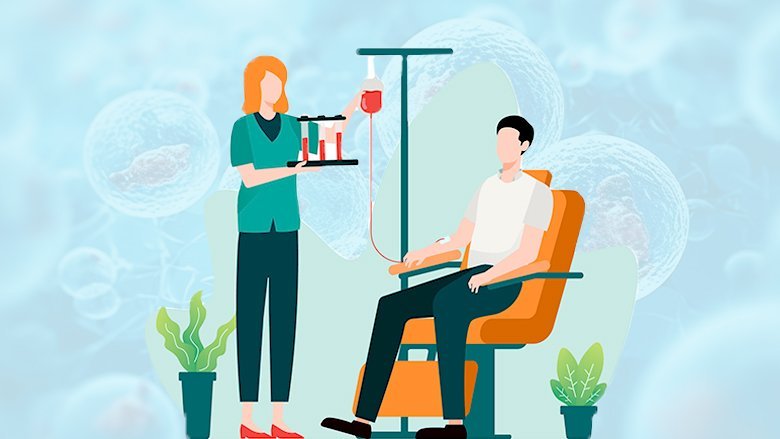
PRP therapy draws a small blood sample from the patient, spins it in a centrifuge to concentrate the platelets, and re-injects that concentrate at the treatment site to support the body's natural repair signaling. It uses the patient's own blood, so rejection risk is minimal, and it is not a stem cell therapy in itself.
PRP Therapy — Quick Facts
| Aspect | What to expect |
|---|---|
| Source material | Patient's own peripheral blood (autologous) |
| Preparation method | Centrifugation to separate and concentrate platelets |
| Typical visit length | Usually completed within 60–90 minutes |
| Common uses | Joint, tendon, and soft-tissue conditions; sometimes combined with stem cell protocols |
| Anesthesia | Local anesthesia at the injection site only |
| Outcome guarantee | None — response varies by patient and condition |
On this page — 2 topics
01What PRP Therapy Involves
Topic 01 of 2Skip ahead: Am I a Good Candidate for PRP?
The short answer, before the detail below.
What Is Platelet Rich Plasma and How Does It Complement Regenerative Cell Therapies? Platelet-Rich Plasma (PRP) is a highly concentrated preparation of growth factors that come from the patient's own blood. The application of PRP is experimental and aimed at promoting tissue repair, minimizing inflammation, and possibly improving the grafting environment for stem cells. PRP is an autologous modality, which means it is safe and easy to tolerate.
Also acknowledged as blood injection therapy, Platelet Rich Plasma (PRP) is a medical treatment being used for a wide range of musculoskeletal issues. Platelet rich plasma injections refer to a sample of blood plasma that has as much as four times the normal quantity of platelets. This treatment augments the body's natural ability to heal itself and is used to improve healing and reduce recovery time for acute and chronic soft tissue injuries. Besides clotting factors, the platelets release growth factors that help begin the healing sequence. With a concentrated quantity of platelets, bigger amounts of these growth factors are released to stimulate a natural healing reaction.
One notable benefit of PRP injections is that they don't have the side-effects that can come with steroid injections or long-term use of non-steroidal anti-inflammatory drugs (NSAIDs).
02Am I a Good Candidate for PRP?
Topic 02 of 2
Common applications discussed during a case evaluation.
- Both acute pain and chronic pain
- Persistent pain despite standard non-operative treatment such as activity modification, physical therapy, and NSAIDs
- Pathological changes seen on diagnostic imaging
- Patient desires to pursue an alternative to surgical treatment
- Tendonopathies, strains and sprains
Conditions Treated by Platelet Rich Plasma:
- Orthopedic and Sports Injuries (Joints, Tendons, Ligaments): individuals with joint inflammation, ligament sprains, or tendon damage usually seek alternatives to surgery to heal, including knee pain, shoulder trauma, and recurrent tendon issues.
- Hair Loss (Androgenic Alopecia): hair growth options target stimulation of the hair follicles to promote natural hair growth.
- Skin Issues (Wrinkles, Scars, Acne Marks): applied to enhance skin texture, smooth fine lines, and reduce scars.
- Other Potential Applications: research extends into dental healing, sexual well-being, wound healing, eye health, and other areas.
Related Videos
More videos from the Stem Cell Care India team and our patients.
Intra-Articular Stem Cell, Exosome & PRP Injection for Knee Strain | USA Patient
Intra-Articular Injection Procedure—Joint Restoration Using Stem Cells, Exosomes & PRP
Is stem cell therapy better than PRP? | Which One Works Better? Explained | Stem Cell Care India
See also:Treatmentsstem cell therapystem cellsAcupuncture TherapyAqua Therapy
Continue Exploring
Related reading, picked for this page.
Supportive Therapy
Exosome Therapy in India: How It Works & What…
Exosome therapy in India.
Read more Supportive TherapyGene Therapy in India: How It Works & Current…
Gene therapy in India.
Read more FAQVIP Treatment at Stem Cell Care India: What It…
VIP treatment stem cell care India.
Read more Stem Cell TherapyStem Cell Therapy: How It Works and Who It May Help
Stem cell therapy.
Read more About UsAbout Stem Cell Care India: Our Story, Team &…
About Us.
Read more Get StartedAppointment
Book appointment stem cell care India.
Read more
About this guide: This page is written, reviewed, and medically approved as credited above. Content reflects general clinical practice around PRP preparation and is not a substitute for individualized medical advice. See our full treatment disclaimer for details.
Keep exploringVIP Treatment at Stem Cell Care India: What It Includes & How It WorksPatient Care and Services: What to Expect at Every Stage of TreatmentHow Stem Cell Therapy Works: The Mechanisms Behind the Treatment
Explore related topics
More depth on the subjects covered in this guide.
Supportive Therapies
The full rehabilitation ecosystem overview.
Exosome Therapy in India
Cell-secreted particles used to support repair signaling.
Physiotherapy in India
Rebuilding strength, mobility, and physical function.
Rehabilitation Therapy in India
The broader rehabilitation framework.
Gene Therapy in India
Correcting or modifying genetic material — mechanism and status.
Aqua Therapy in India
Water-based exercise for reduced joint loading.
Still have a question?
Every case is different. A free medical evaluation gets you a direct, physician-reviewed answer for your specific condition — typically reviewed within about 7 working days.
Keep reading
Articles You May Interest
Watch
Related Videos


Ready to take the next step?
Talk to a case coordinator about your specific condition and treatment options.
24–48hFrom sending your reports to a doctor-reviewed answer
10,000+Patients treated across 65+ countries
4.9 / 5From 196+ verified Google reviews
Sources & Further Reading
Independent public sources for checking the evidence yourself. The PubMed and ClinicalTrials.gov links open live database searches, so results update as new research is published. Listing a source here is not an endorsement of any treatment.